

The short textured French crop combines a cropped fringe, faded or tapered sides, and a choppy, textured top into one of the most low-maintenance men’s haircuts available today.
It works across straight, wavy, curly, thick, and fine hair, adapts to nearly every face shape, and needs only a few minutes of daily styling. Rooted in military grooming and popularized by shows like Peaky Blinders, the crop has evolved into dozens of modern variations that pair the same forward-brushed fringe with different fade heights, texturing techniques, and finishing touches.
This guide breaks down 30 of the best versions, explains how each one differs, and shows you exactly how to ask for, style, and maintain the cut so it looks sharp between barbershop visits.
What Is a Short Textured French Crop?
A short textured French crop is a haircut with closely cropped or faded sides, a short layered top, and a fringe brushed forward over the forehead. Unlike the classic French crop, which keeps the top relatively smooth, the textured version uses point-cutting or razor work to remove bulk from inside the hair. This creates choppy layers that add movement, separation, and volume instead of a flat, polished finish.
The defining features are:
- A forward-facing fringe, usually sitting anywhere from mid-forehead to just above the brow
- Short, faded, or tapered sides that contrast with the top
- A layered, jagged top that looks lived-in rather than rigid
- Minimal daily styling, since the layering does most of the work
Because the cut relies on texture rather than length, it suits nearly every hair type and can be dressed up for the office or worn loose for a casual look.
30 Best Short Textured French Crop Haircuts
1. Classic Short Textured French Crop

The foundation of the style: short faded sides, a layered top with natural movement, and a blunt fringe brushed forward. It suits most face shapes and hair textures and is the easiest version to ask for by name.
2. Short Textured French Crop with Low Fade

The fade starts just above the ears and blends gradually into the top, keeping more length on the sides than a mid or high fade. This is a subtle, workplace-friendly option for men who want contrast without drawing too much attention to the transition line.
3. Short Textured French Crop with Mid Fade

The fade begins around the temple, giving a balanced amount of contrast between the sides and the textured top. It’s the most requested fade height because it flatters a wide range of head shapes.
4. Short Textured French Crop with High Fade
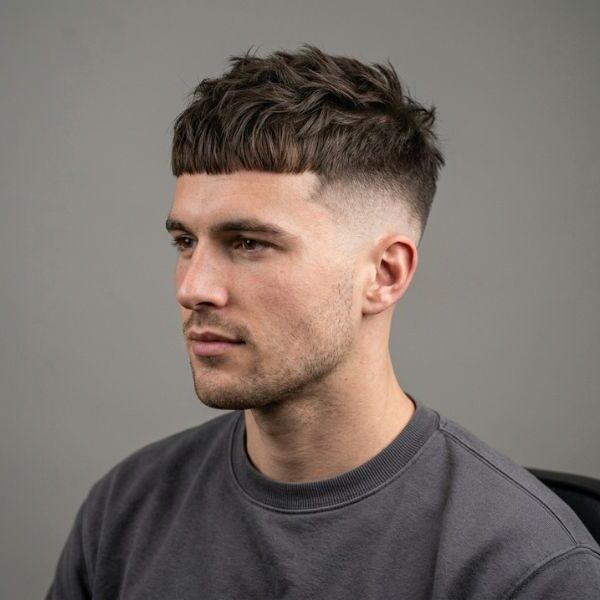
The fade climbs well above the temple, leaving a smaller area of longer hair on top. This creates a sharper, more dramatic contrast and makes the fringe and texture on top stand out even more.
5. Short Textured French Crop with Skin Fade

The sides taper all the way down to bare skin near the hairline, then blend up into the crop. It’s the boldest fade option and works especially well for men who want maximum contrast or have thinning hair on the sides.
6. Short Textured French Crop with Taper Fade
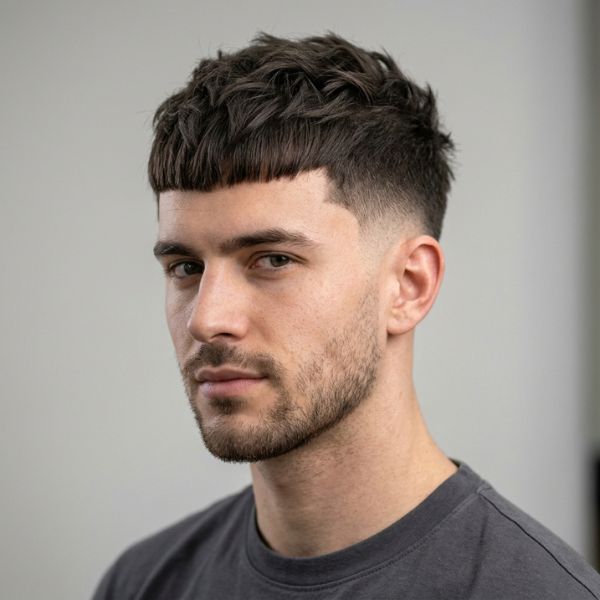
A taper fade shortens the hair gradually without ever reaching skin, giving a softer transition than a true fade. It’s a good middle ground for men who want definition on the sides but a less severe look overall.
7. Short Textured French Crop with Low Taper
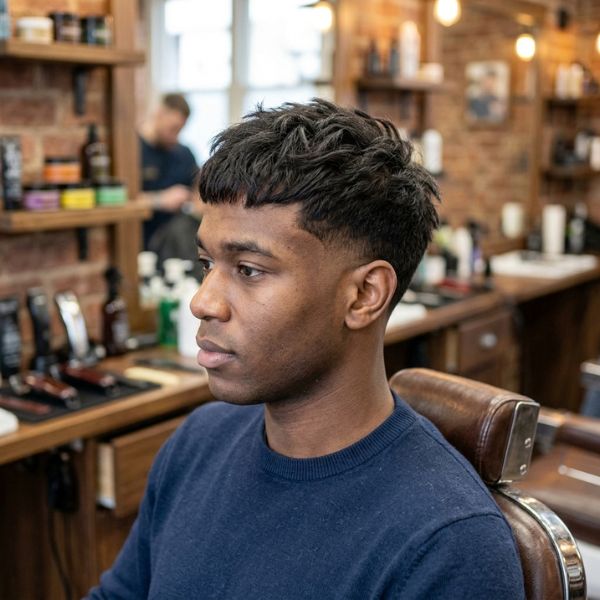
The taper stays close to the hairline and doesn’t climb far up the head, preserving more natural length on the sides. This version reads as more conservative and works well in professional settings.
8. Short Textured French Crop with Mid Taper
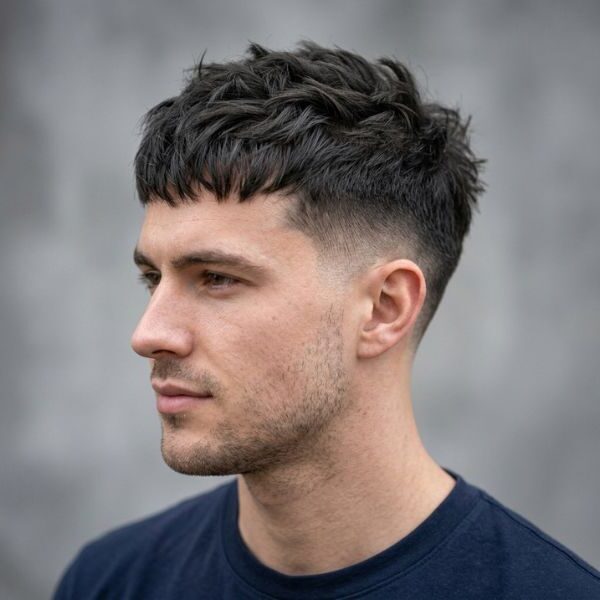
The taper rises to around the middle of the head, offering more visible graduation than a low taper without the boldness of a high fade. It’s a versatile choice that pairs well with thick or coarse hair.
9. Short Textured French Crop with Drop Fade

The fade line curves downward behind the ear instead of running straight, following the natural curve of the skull. This adds a distinctive shape to the sides while keeping the top’s texture as the focal point.
10. Short Textured French Crop with Burst Fade

The fade radiates outward from around the ear in a semicircular pattern rather than running in a straight line across the head. It adds detail and dimension to the sides and pairs well with a shorter, choppier fringe.
11. Short Textured French Crop with Disconnected Undercut
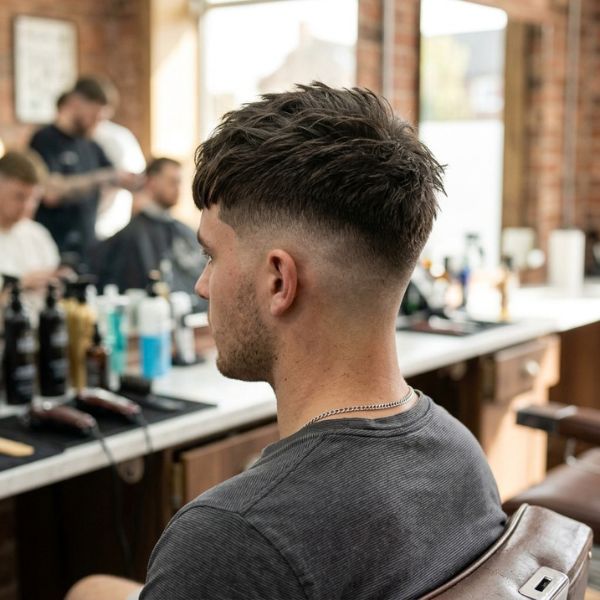
Instead of a blended fade, the sides are cut dramatically shorter than the top with a hard, visible line separating the two lengths. This creates maximum contrast and gives the top more visual weight.
12. Short Textured French Crop with Blunt Fringe

The fringe is cut in a straight, even line across the forehead rather than left jagged. This version leans closer to the classic French crop but keeps the layered, textured top underneath.
13. Short Textured French Crop with Jagged Fringe
The fringe is point-cut into an uneven, choppy edge instead of a straight line. It reads as more casual and works particularly well with wavy or curly hair, since the irregular edge blends naturally with the texture.
14. Messy Short Textured French Crop
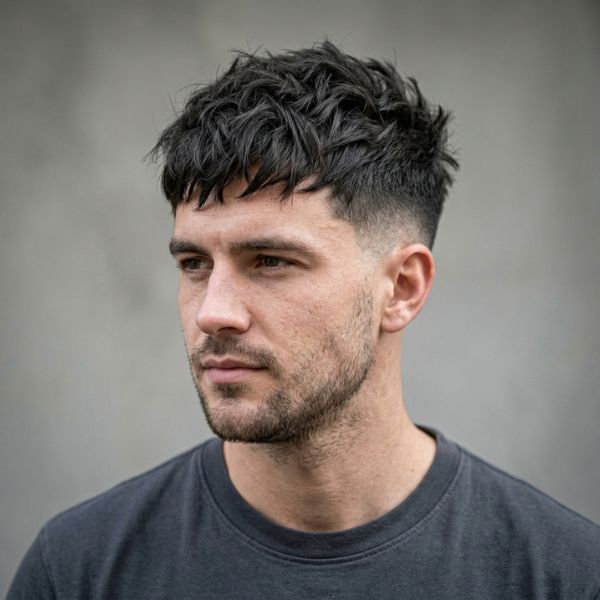
Styled with fingers rather than a comb, this version emphasizes a lived-in, undone finish with pieces of hair separating in different directions. A matte clay or paste helps hold the messy shape without adding shine.
15. Spiky Short Textured French Crop

The top is styled upward and outward into small, defined spikes using a stronger-hold paste or wax. This adds height and a more energetic look while keeping the fringe and sides consistent with the standard crop.
16. Short Textured French Crop for Straight Hair
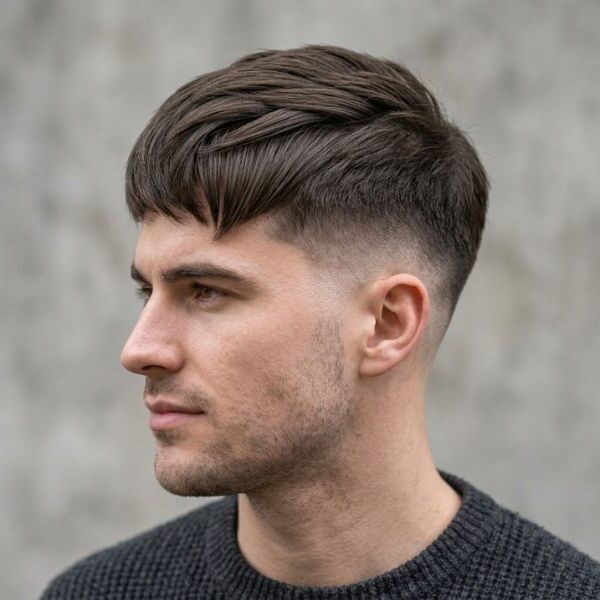
Straight hair holds a crisp fringe line well and shows off the layering clearly, since there’s no natural curl to disguise the cut. A lightweight cream keeps straight strands from looking flat while still showing texture.
17. Short Textured French Crop for Wavy Hair
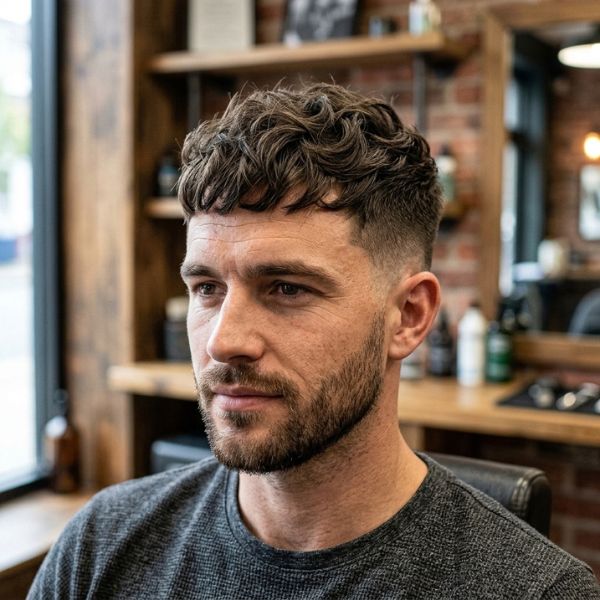
Natural waves add extra texture to the top without much styling effort, making this one of the lowest-maintenance versions of the cut. A light sea salt spray or texturizing product enhances the wave pattern.
18. Short Textured French Crop for Curly Hair
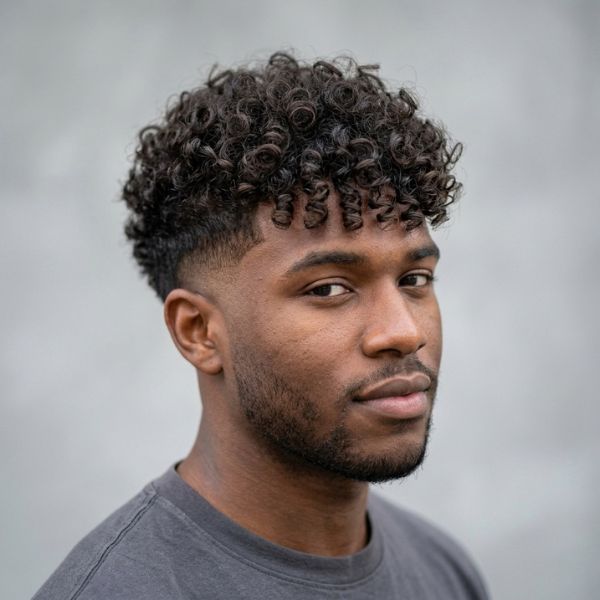
Curly hair naturally creates volume and definition on top, so the layers are usually cut a bit longer to let the curl pattern show through. A curl-defining cream helps control frizz while preserving shape.
19. Short Textured French Crop for Thick Hair
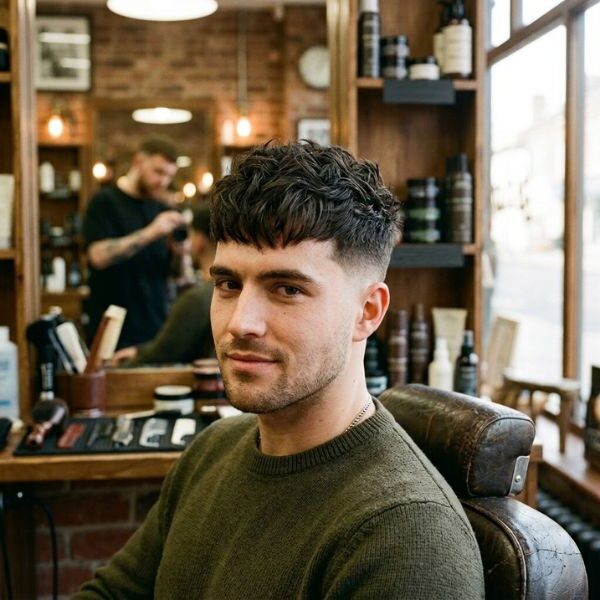
Thick hair benefits from heavier point-cutting to remove bulk, which keeps the top from looking too dense or heavy. This also makes the fringe easier to style and prevents it from sitting too flat against the forehead.
20. Short Textured French Crop for Thin Hair

For thinner hair, barbers usually cut the top slightly shorter and rely on a lightweight texturizing powder or matte product to create the illusion of density. Fewer, more precise layers work better than heavy thinning.
21. Short Textured French Crop for a Receding Hairline
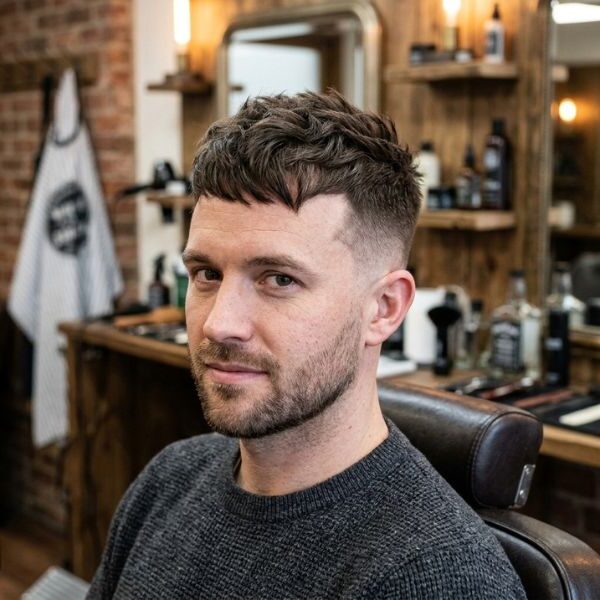
The fringe is brushed forward to cover a receding hairline, and a fade or taper on the sides reduces contrast between the hairline and the scalp. This makes the recession far less noticeable without needing extra length.
22. Short Textured French Crop for Round Faces

A slightly higher fade and more height added to the crown help elongate a round face, while the fringe adds structure at the forehead. Keeping the sides tighter avoids adding extra width to the face.
23. Short Textured French Crop for Oval Faces

Oval face shapes are considered the most versatile for this cut, since nearly any fade height and fringe length will work well. This makes it a safe, flattering choice for men who aren’t sure which variation to request.
24. Short Textured French Crop for Square Faces
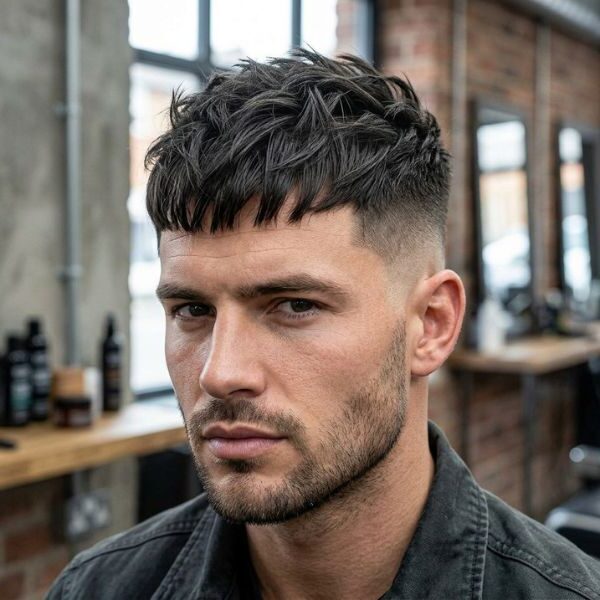
Softer, jagged layers on top help balance out a strong jawline, while a mid or low fade avoids adding too much sharpness to the sides. The fringe can be worn slightly longer to soften the forehead area.
25. Short Textured French Crop for Asian Hair

Thicker, straighter Asian hair often holds its shape well with minimal product, and barbers typically use heavier texturizing to prevent the top from looking too block-like. A matte clay works best for definition without excess shine.
Read more: Curly French Crop: 20 Best Haircuts for Men with Curls
26. Short Textured French Crop with Beard
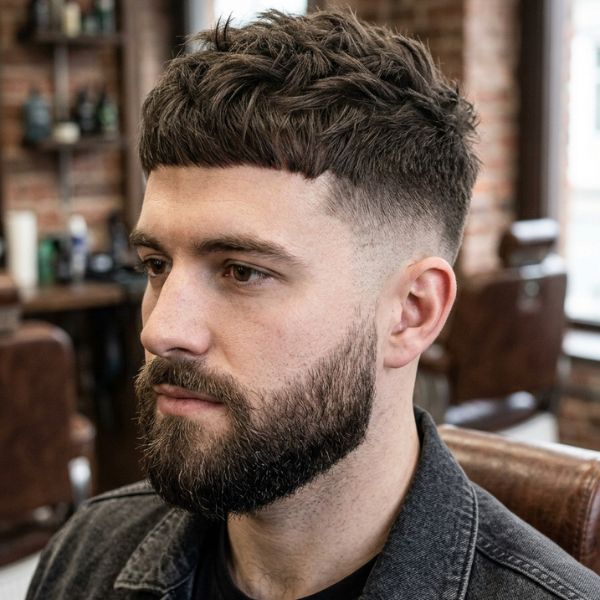
Pairing the crop with a full or stubble beard adds structure to the lower half of the face while the textured top balances it from above. The fade on the sides can blend directly into the beard line for a seamless, well-groomed look.
27. Short Textured French Crop with No Fade
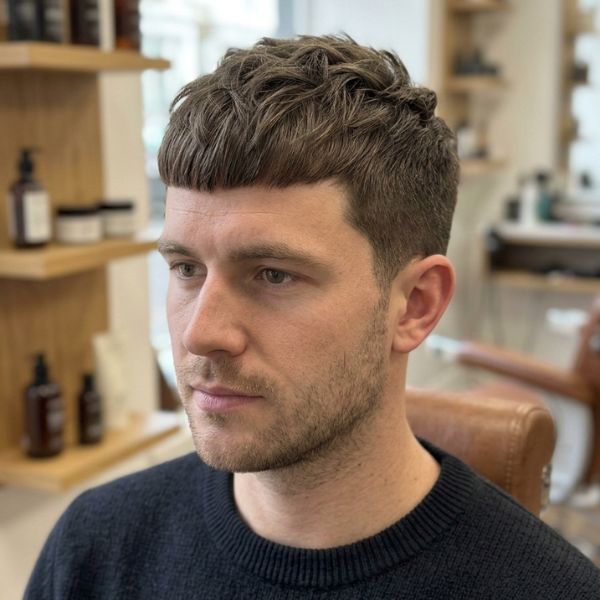
Instead of a fade, the sides are trimmed with scissors or a single clipper guard for a more uniform, low-contrast length. This creates a softer, more conservative look that suits traditional workplaces.
28. Blonde Short Textured French Crop
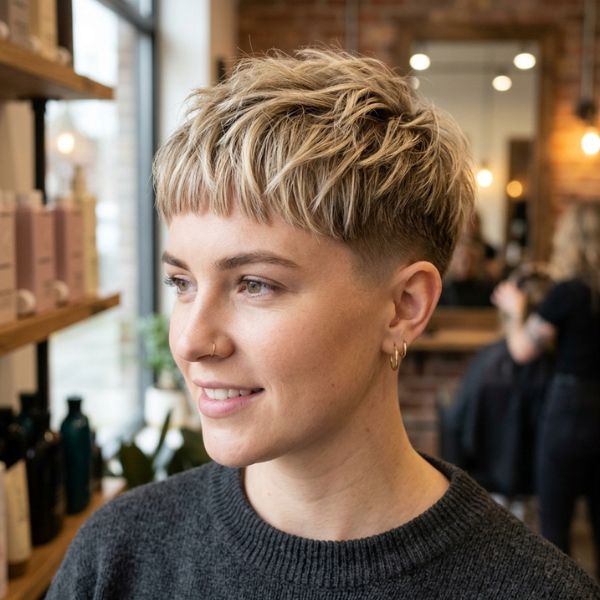
Lightening the top with balayage or full bleach highlights the choppy layers and adds extra dimension to the texture. It’s typically paired with a fade to keep the darker natural color visible on the sides for contrast.
29. Neat Professional Short Textured French Crop
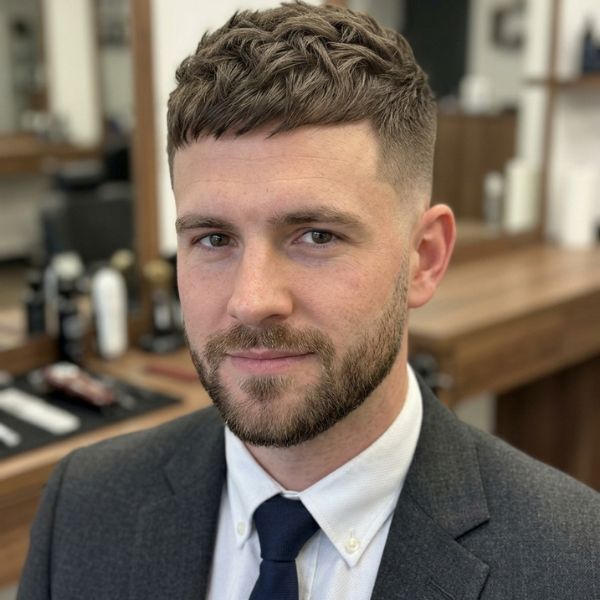
The layers are kept shorter and more controlled, the fringe is combed rather than left messy, and a low or mid fade keeps the sides tidy. This version trades some of the choppy texture for a cleaner, office-appropriate finish.
30. Short Textured French Crop with Tapered Sides

The sides are gradually shortened using scissors or clippers without a hard fade line, blending smoothly into the neckline and hairline. This offers a softer transition than a fade while still keeping the sides notably shorter than the top.
Read more: Long French Crop: Best Haircut Ideas for Men
Short Textured French Crop Haircut Styles at a Glance
| Style | Best For | Fade Type |
| Classic short textured French crop | Most face shapes and hair types | None or low fade |
| Skin fade version | Maximum contrast, thinning sides | Skin fade |
| Drop or burst fade version | Men wanting a detailed side pattern | Drop/burst fade |
| Disconnected undercut version | Bold, high-contrast look | Undercut, no blend |
| Curly or wavy hair version | Low-maintenance natural texture | Low to mid fade |
| Receding hairline version | Camouflaging hair loss | Low to mid fade |
| Professional version | Office and formal settings | Low fade or taper |
French Crop vs Short Textured Crop: What’s the Difference?
The French crop and the textured crop are closely related, but they aren’t identical. A traditional French crop has a smoother, often blunt fringe and a top that’s cut to lie relatively flat, giving it a neater, more structured appearance. A textured crop, by contrast, uses point-cutting or razoring to create choppy, separated layers on top, giving it a messier, more lifted finish.
The short textured French crop sits between the two: it keeps the French crop’s signature forward fringe and faded sides but borrows the textured crop’s layered, choppy top. In practice, this means you get the clean silhouette of a French crop with the natural movement and lower styling effort of a textured cut.
How to Pick the Best Short Textured French Crop
Choose by Hair Type
Straight hair shows off crisp lines and benefits from lightweight creams that add texture without flattening the top. Wavy and curly hair naturally supports the choppy look with little product needed, while thick hair usually requires more aggressive point-cutting to avoid excess bulk. Fine or thin hair does best with shorter layers and a matte, volumizing product to create the appearance of density.
Select by Face Shape
Round faces benefit from added height on top and a slightly higher fade to create the illusion of length. Square faces look best with softer, jagged layers that ease the sharpness of the jawline. Oval faces can wear almost any version of the cut, and longer faces generally look best with a lower fade and more fringe coverage to reduce visual length.
Read more: French Crop Mid Fade: The Complete Guide to Styles, Maintenance and Barber Tips
What Clipper Guard Should You Ask For?
Clipper guards run from a #0 or #1/2, which cuts down to roughly 1/16 inch and is used for skin fades, up to a #8, which leaves about an inch of length and is often used on top before blending down. A #1 to #2 guard is standard for the base of a fade, while a #3 to #4 is commonly used to start a taper before blending upward. For the top of a short textured French crop, barbers typically work with scissors or a longer guard, such as a #5 to #8, then point-cut through the ends to build in the layered texture. Because guard measurements can vary slightly between clipper brands, it’s worth confirming the exact length with your barber rather than requesting a number alone.
How to Ask Your Barber for a Short Textured French Crop
Bring a reference photo, since fade height, fringe length, and texture level can all vary significantly within this style. Specify your preferred fade type, such as low, mid, high, skin, taper, drop, or burst, along with how blunt or jagged you’d like the fringe. Mention your hair type and any concerns, such as a receding hairline or thinning crown, so your barber can adjust the cut accordingly. Finally, ask for point-cutting or razor work on top specifically, since this is what separates a textured crop from a standard one.
How to Style a Short Textured French Crop
- Start with towel-dried, not soaking wet, hair for better product control.
- Apply a pea-sized amount of matte clay, paste, or lightweight cream, working it evenly through your fingers first.
- Distribute the product through the top using your fingers rather than a comb, focusing on the roots for lift.
- Brush or push the fringe forward and slightly to one side, depending on how you want it to fall.
- Use your fingertips to separate individual sections for a more textured, piece-y finish.
- Finish with a light-hold spray if you want the shape to last through the day without stiffness.
How to Take Care of the Haircut
Get the fade or taper refreshed every two to three weeks to keep the contrast between the sides and top sharp, since this area grows out faster than the layered top. Wash with a gentle shampoo two to three times a week rather than daily, since over-washing can strip natural oils and dull the texture. Trim the fringe as needed between full haircuts if it starts falling into your eyes. A light conditioner or leave-in treatment helps keep thicker or curlier hair manageable and prevents the top from becoming frizzy or unruly.
Common Short Textured French Crop Mistakes to Avoid
- Using too much product, which weighs down the layers and kills the texture the cut relies on
- Letting the fade grow out too long between trims, which blurs the contrast that defines the style
- Choosing a fringe length that’s too long for your hair type, causing it to flop instead of hold shape
- Skipping point-cutting and asking only for a standard trim, which results in a flat top instead of a textured one
- Ignoring face shape when choosing fade height, which can throw off the overall balance of the cut
Conclusion
The short textured French crop earns its popularity by combining a sharp, defined silhouette with genuinely low-maintenance styling.
Whether you choose a subtle low taper for the office, a bold skin fade with a disconnected top, or a curly, low-effort version for everyday wear, the core formula, faded or tapered sides, a layered top, and a forward fringe, stays flexible enough to suit almost any face shape or hair type.
Bring a clear reference to your next barbershop visit, ask specifically for point-cutting on top, and keep up with regular trims to get the most out of this modern classic.

Noah Daniel Davis is an experienced content writer and hair enthusiast who creates engaging articles about hairstyles, haircuts, hair care, and the latest styling trends. His goal is to share simple, useful, and inspiring hair ideas that help readers discover styles they love.
