

Choosing a new haircut is never just about following a trend, it is about finding a style that actually suits your face, hair texture and daily routine. The long French crop has become one of the most requested men’s cuts in barbershops today because it strikes a rare balance between low maintenance and high style.
It works on straight, wavy and curly hair, flatters nearly every face shape, and can be dressed up for the office or worn messy for the weekend. This guide breaks down what separates the long French crop from the classic version, how to choose the right fade, taper and fringe length for your features, and how to keep the cut looking sharp between barber visits.
Longer French Crop: What Makes This Style Different?
The standard French crop keeps the fringe short, usually sitting mid-forehead, with tight sides and a compact silhouette. The longer version stretches that fringe down toward the eyebrows and leaves noticeably more length through the crown, giving the top of the head extra volume and movement. This added length changes how the haircut behaves day to day.
A shorter crop needs almost no styling and dries into shape on its own. A longer crop, on the other hand, gives you room to push the fringe forward for a rugged, textured finish, sweep it to one side for a smarter look, or slick it back when you want something sleeker. The trade-off is that a longer top needs a little more product and a slightly more deliberate blow-dry to keep it from falling flat.
Barbers typically achieve the longer look by leaving one to two inches of hair at the crown instead of the half inch to one inch used in a classic crop, while the sides are still cut short or faded for contrast. That contrast between a fuller top and cropped sides is what gives the style its shape and keeps it from looking like an unstructured grow-out.
French Crop Fringe Long Buzz Cut Fade: Is This Style Right for You?
This variation pairs a long, swept fringe with buzzed, faded sides for maximum contrast. It suits men who want a bold, editorial look rather than an office-safe one, and it works best with straight or slightly wavy hair that holds a forward shape without heavy product. If your hair is very fine or your hairline is uneven, ask your barber to soften the line between the fringe and the fade so the transition looks intentional rather than abrupt.
What Is a French Crop?
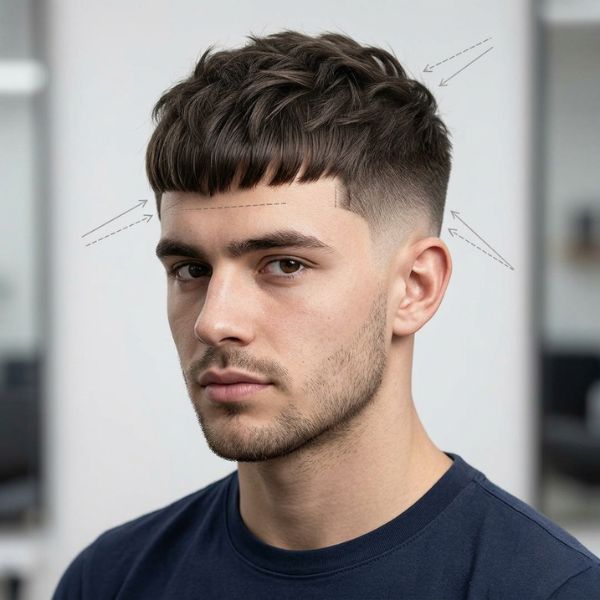
A French crop is a men’s haircut built on three elements: short or faded sides, a slightly longer top, and a blunt or textured fringe that sits across the forehead instead of being brushed back or parted. The style is often traced back to 1920s France, where it developed from military-style crew cuts before being softened into a more fashion-forward silhouette. It resurfaced in mainstream culture partly through period dramas featuring sharply dressed characters with forward fringes, which reintroduced the cut to a new generation of men in the last decade.
The French crop is frequently confused with the Caesar cut, but the two are not identical. A Caesar cut keeps the fringe short and horizontal across the entire hairline with very little length variation, while a French crop allows the fringe to be noticeably longer than the rest of the top and gives the barber more room to add texture or a forward sweep. Understanding that distinction matters when you are showing a barber a reference photo, since asking for “a Caesar” and “a French crop” can produce two visibly different results.
Long French Crop Haircut for Men
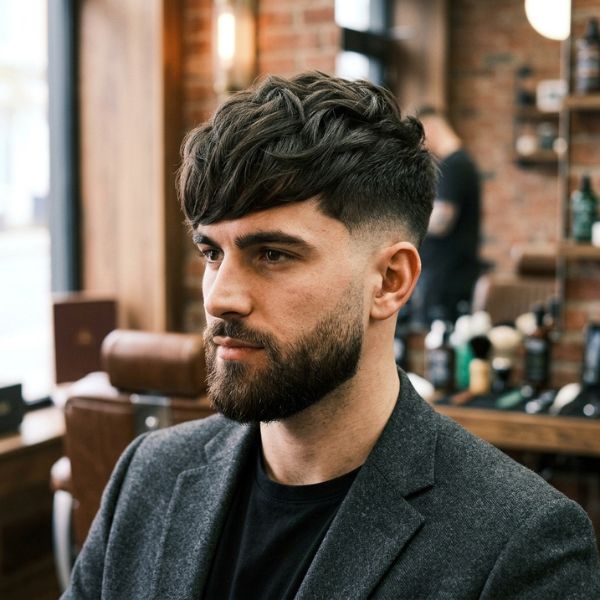
The long French crop haircut takes the core formula, short sides and a forward fringe, and dials up the length on top so there is enough hair to style rather than simply comb into place. It is a strong choice for men who want a cut that can transition between a clean, professional look during the week and a more relaxed, tousled style on days off.
Because there is more hair to work with, this version also does a better job of disguising a receding hairline, a cowlick, or a widow’s peak, since the extra length gives you the flexibility to redirect growth patterns rather than fight them. Men with thinning hair on top often find that the longer fringe, combed forward, creates the appearance of a fuller hairline without resorting to a comb-over.
Long Textured French Crop
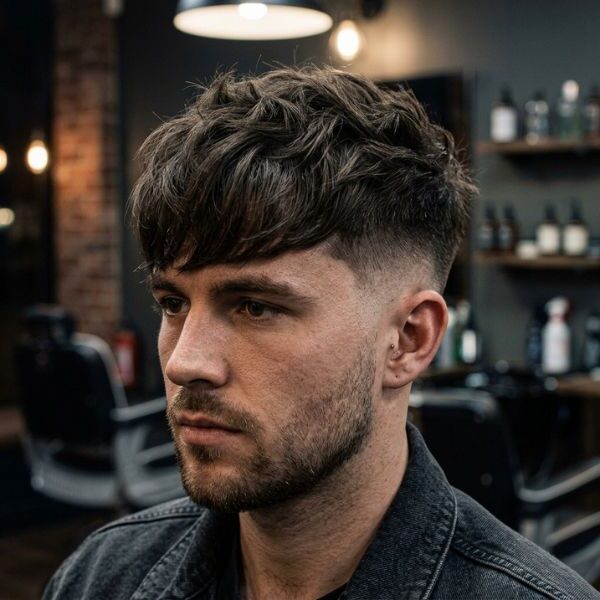
The long textured French crop adds deliberate roughness to the top through point cutting or razor work, which breaks up the hair into uneven pieces instead of one uniform block. The result looks less structured and more lived-in, which is why this variation is popular with men who want a stylish cut that still looks effortless.
Texturising works especially well on:
- Thick hair, where it removes bulk and stops the top from looking heavy
- Wavy hair, where it enhances natural movement instead of flattening it
- Fine hair, where careful point cutting can create the illusion of extra density
Ask your barber for a texturising or thinning shear on the crown while keeping the perimeter of the fringe blunt. That combination gives you a top that moves naturally but still has a defined, deliberate edge at the front.
Read more: French Crop Mid Fade: The Complete Guide to Styles, Maintenance and Barber Tips
Long French Crop Fade Styles
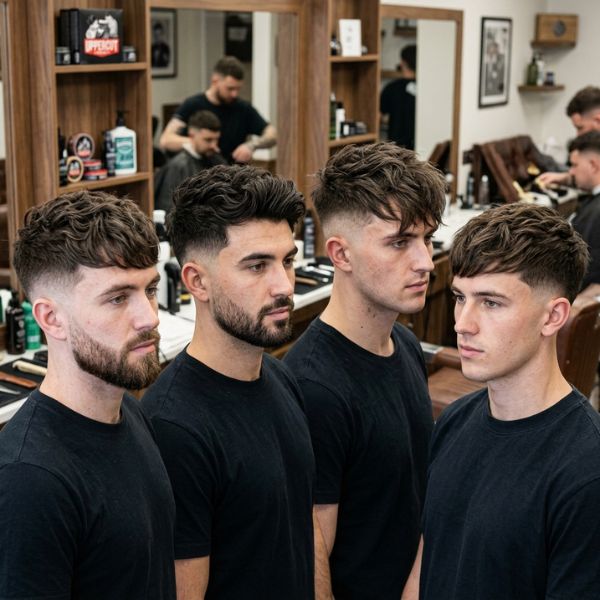
A fade adds a gradient effect on the sides and back, tapering hair down from a set length to almost nothing, and it is the single biggest factor in how bold or subtle a long French crop looks. The main fade heights are:
- High fade: the fade starts near the top of the head, creating the strongest contrast against the long top. Best suited to men who want a modern, high-impact look.
- Mid fade: the fade begins around the middle of the head, offering a balance between sharpness and a softer, more traditional appearance.
- Low fade: the fade starts just above the ears, giving a subtler transition that reads as smart and understated.
- Skin fade: hair is faded down to bare skin at the shortest point, producing the crispest possible line but requiring the most frequent upkeep.
A skin fade tends to lose its sharp edge fastest because regrowth is most visible against bare skin, while a low fade or taper grows out more gracefully. If you are new to fades, a mid or low fade is usually the easier starting point before committing to a high skin fade.
Read more:Potongan Rambut French Crop Fade: Panduan Lengkap 2026 untuk Lelaki
Long French Crop Low Fade and Taper Options
A low fade or taper is worth considering if you want the definition of a fade without the stark, high-contrast look. A taper keeps more length throughout the sides and blends gradually into the neckline, rather than dropping quickly to skin, which makes it a practical choice for workplaces with conservative grooming expectations.
Low fades and tapers also suit men with thicker or coarser hair, since a heavy skin fade can look uneven if the hair on the sides is very dense. A gradual taper gives the barber more room to blend thick hair smoothly, avoiding the patchy look that can happen when dense hair is cut too abruptly against bare skin.
Long French Crop for Different Hair Types
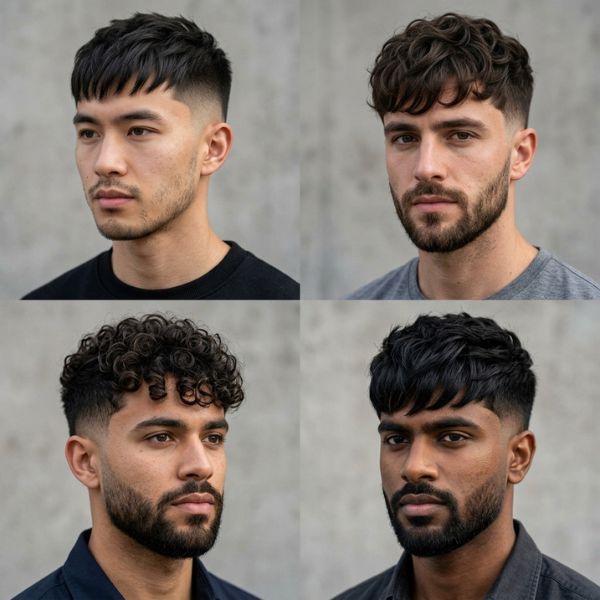
| Hair Type | Recommended Approach |
| Straight | A blunt, forward-swept fringe with a sharp fade holds its shape well and needs minimal daily styling. |
| Wavy | Light texturising lets natural movement show through; a matte cream keeps waves defined without looking greasy. |
| Curly | A slightly longer top with a soft, rounded fringe works better than a hard blunt line; curl cream helps define individual curls. |
| Thick | Texturising or thinning shears remove bulk on top so the fringe does not sit too heavy on the forehead. |
| Thin or fine | Point cutting adds the appearance of density; heavy pomades should be avoided since they can make fine hair look flat and separated. |
Long French Crop for Different Face Shapes
A good barber will adjust the fringe length, fade height and top volume based on face shape, since the same haircut can look very different from one face to the next.
- Round faces: extra height at the crown combined with a shorter, sharper fade helps elongate the face rather than widen it.
- Oval faces: this shape suits almost any variation of the long French crop, from a heavy fringe to a textured, swept-back style.
- Square faces: a softer, slightly feathered top and a longer fringe take the edge off strong, angular jawlines.
- Heart-shaped faces: added height and volume at the crown, paired with a side-swept fringe, balances a narrower chin against a broader forehead.
- Long faces: keeping the top shorter and avoiding excessive height at the crown prevents the face from looking stretched.
Long French Crop Fringe and Bangs
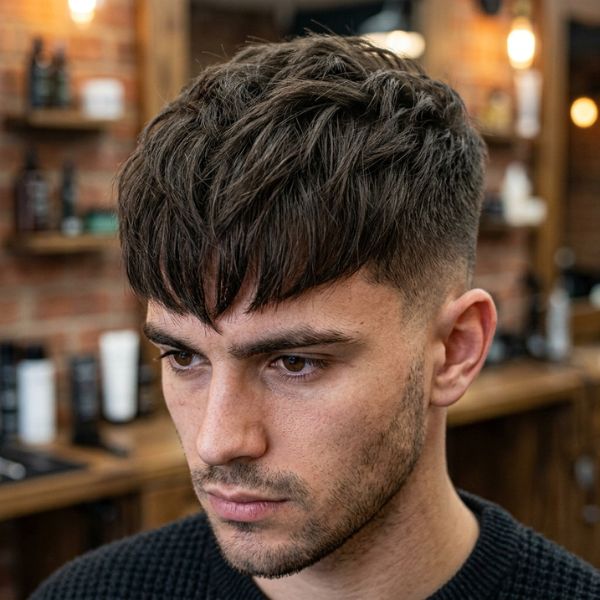
The fringe is the defining feature of the entire haircut, so its length and shape deserve as much attention as the fade. A blunt fringe, cut in a straight horizontal line, gives a cleaner and more structured look that suits straight hair and formal settings. A textured fringe, cut with a razor or point-cutting technique, creates a softer, broken edge that fits more casual styling.
For the long version specifically, the fringe usually falls somewhere between the eyebrows and the middle of the forehead. Barbers generally recommend telling them directly where you want the fringe to sit, since “long” can mean very different things depending on the reference photo you bring in. A fringe that grazes the eyebrows gives maximum styling flexibility, since it can be pushed up for a shorter look or left down for full coverage.
Read more: 15 Best French Crop Mullet Haircuts for Men
Crew Cut vs French Crop
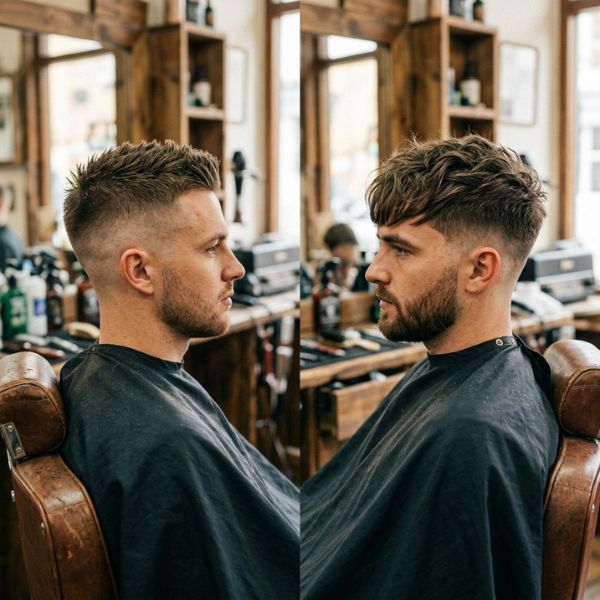
| Feature | Crew Cut | French Crop |
| Top length | Short and uniform all over | Noticeably longer, especially at the front |
| Fringe | None, hair is cut short across the whole head | Defined, often forward-swept fringe |
| Styling effort | Minimal, close to zero daily styling | Moderate, benefits from light product |
| Overall look | Clean, no-fuss, traditional | Modern, versatile, fashion-forward |
| Best for | Men who want maximum simplicity | Men who want more styling options |
How to Cut and Style a Long French Crop
Getting a clean result, whether at the barbershop or when refreshing the style at home, comes down to following the right sequence.
- Discuss the fringe length first. Decide whether you want it resting near the eyebrows or higher on the forehead before the barber touches the clippers, since this decision shapes the whole cut.
- Choose the fade or taper height. Confirm whether you want a high, mid, low or skin fade, and how it should blend into the length on top.
- Cut the sides first. Barbers typically fade or taper the sides and back before shaping the top, so the crown length can be judged against the finished sides.
- Texturise or blunt-cut the top, depending on whether you want a structured or a more relaxed finish.
- Dry the hair forward using a vent brush or your fingers while applying light heat, focusing on lifting the roots at the crown.
- Apply a lightweight styling product, such as a matte clay, texturising cream or sea salt spray, working it evenly from roots to ends.
- Shape the fringe last, pushing it forward or slightly to one side depending on the finish you want.
At home, the routine is simpler: rinse or dampen the top, work in a small amount of product, and use your fingers or a brush to push the fringe into place. Avoid heavy gels, which tend to flatten the texture that makes this cut look intentional.
Best Long French Crop Variations
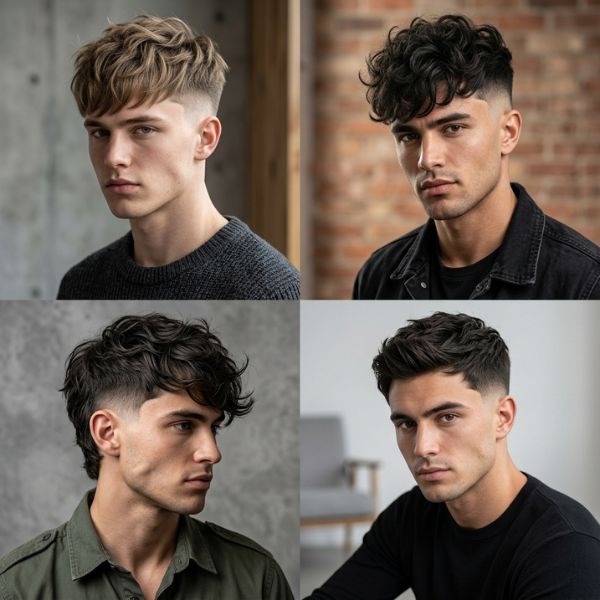
There is no single “correct” long French crop, and part of the style’s appeal is how many directions it can be taken in. Popular variations include:
- Disconnected long French crop: a sharp line separates the long top from tightly faded sides, creating two distinct lengths rather than a gradual blend.
- Messy long French crop: heavier texturising and a lighter styling product create a deliberately undone, tousled finish.
- Slicked-back long French crop: the fringe is combed straight back instead of forward, giving a smarter, more formal alternative.
- Curly long French crop: curls are left longer on top and allowed to sit naturally, paired with short or faded sides for contrast.
- French crop with beard: the sharp lines of the crop are balanced with a full or stubble beard, which works particularly well for softer facial features.
- Grey long French crop: the cut is left slightly longer to showcase natural grey or silver tones, giving a distinguished, polished look for older men.
Long French Crop for Colour and Personal Style
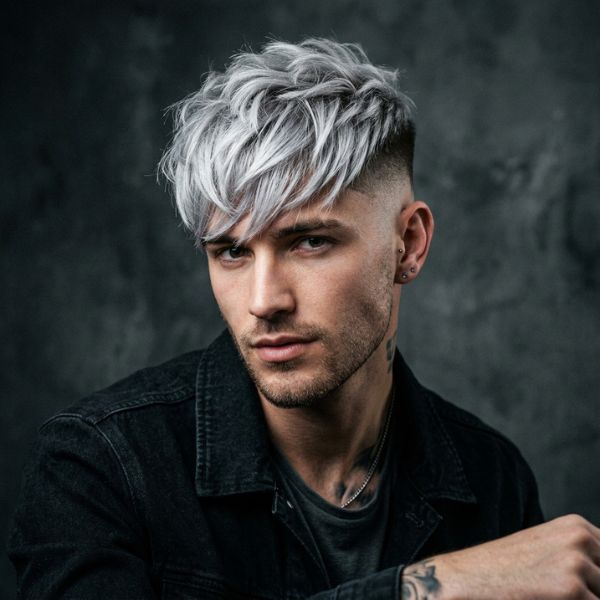
Colour can be used to add extra dimension to a long French crop, particularly since the longer top gives more surface area for highlights, balayage or a solid colour change to show. Subtle highlights through the fringe catch the light and draw attention to the forward sweep, while a fully bleached or dyed top creates a much bolder contrast against darker faded sides.
Men who prefer a more conservative look can keep their natural colour and instead express personal style through the fade height, fringe length or amount of texture, since the cut is flexible enough to look sharp without any colour work at all. For those who do want to experiment, it is worth discussing hair health with a colourist first, since frequent bleaching combined with regular trims can leave the top prone to breakage if it is not conditioned properly.
Is the Long French Crop Easy to Maintain?
| Element | Typical Trim Frequency |
| Skin fade | Every 2 to 3 weeks |
| Mid or low fade | Every 3 to 4 weeks |
| Fringe shape-up | Every 2 to 3 weeks |
| Full haircut (top and sides) | Every 4 to 6 weeks |
Final Thoughts on the Long French Crop
The long French crop earns its popularity by doing something few haircuts manage: looking sharp with almost no effort while still leaving room for personal style. Whether you go for a blunt fringe and a crisp skin fade or a soft, textured top with a low taper, the cut adapts to your hair type, face shape and lifestyle rather than forcing you to adapt to it. Bring a clear reference photo to your next barber appointment, be specific about fringe length and fade height, and you should walk out with a haircut that works just as well for a Monday morning as it does for a night out.
Frequently Asked Questions About the Long French Crop
Is a long French crop suitable for thinning hair?
Yes. The extra length on top and the forward fringe help cover a receding hairline or thinning crown more naturally than a shorter cut.
How long does hair need to be to get a long French crop?
Most barbers recommend at least two to three inches on top so there is enough length to create a proper fringe and texture.
Can curly hair handle a long French crop?
Yes. Curly hair works well with a slightly longer, softer fringe rather than a hard blunt line, paired with faded or short sides for contrast.
What is the difference between a French crop and a textured crop?
A French crop has a defined, often forward-swept fringe, while a textured crop is generally messier and more uniform in length across the top.
How often should I get my long French crop trimmed?
Plan on a full trim every four to six weeks, with a fringe or fade touch-up every two to three weeks if you have a fade.
Does a long French crop suit older men?
Yes. A softer fringe and slightly longer top can look distinguished, especially when left natural to show grey or silver tones.

Noah Daniel Davis is an experienced content writer and hair enthusiast who creates engaging articles about hairstyles, haircuts, hair care, and the latest styling trends. His goal is to share simple, useful, and inspiring hair ideas that help readers discover styles they love.
