

A low taper mullet is a haircut with short, neatly blended sides and a longer back. The taper starts low, just above the ear, so the cut looks tidy from the front and relaxed from behind. It is the easiest way to wear a mullet without it looking like the 1980s original.
The cut has many versions, though. The top can be short or long, curly or straight, with or without a fringe. The back can be a little longer or a lot. Tell your barber the wrong thing and you may leave with a hard step between the top and the back.
This guide explains what the cut is, who it suits and which five styles to try. You will also find styling routines, product picks, upkeep timing and the mistakes to avoid.
What Is a Low Taper Mullet?

A low taper mullet combines two ideas:
- Low taper: the hair on the sides and at the neckline shortens gradually, starting just above the ear. It keeps some length and does not drop to bare skin.
- Mullet: the hair stays shorter at the front and sides and longer at the back.
A modern mullet blends the two lengths with layers, a taper or a fade. The old hard step is gone. A low taper gives the softest blend of all, because the transition is gentle and the sides stay tidy.
Typical lengths:
- Top and crown: about 3 to 4 inches
- Back: about 5 to 6 inches, or longer if you are growing it
- Sides: tapered from short at the ear to blended at the top
Who Should Try a Low Taper Mullet?

It suits you if you:
- Want a bold shape that still looks neat
- Have at least medium length hair, or are happy to grow it
- Like a cut that works with natural waves or curls
- Can visit a barber about once a month
Face shape matters, but it is easy to adjust. Oval and square faces suit it easily. A round face looks better with extra height at the crown. A long face works better with softer sides and a fuller fringe.
Hair type works like this:
- Straight: needs texture spray or a blow dry to avoid a flat look.
- Wavy: supports the shape naturally.
- Curly: works well. Cut with shrinkage in mind, since curls spring up when dry.
- Thick: ask for internal layering to remove bulk.
- Fine: texture makes it look fuller.
Thinning hair needs a little thought. A receding hairline pairs well with a fringe. Crown thinning is easier to hide with layers and a clear taper.
Benefits of a Low Taper Mullet

- Looks tidy. The low taper keeps the sides clean.
- Easier to wear than a high fade mullet. The contrast is soft, so it fits more settings.
- Grows out well. The taper blurs slowly, so it stays presentable between trims.
- Works with most textures. Straight, wavy and curly hair all suit it.
- Easy to personalise. You can change the fringe, the top length or the back length.
5 Best Low Taper Mullet Hairstyles
Pick one or two and save photos from the front, side and back.
Classic Low Taper Mullet
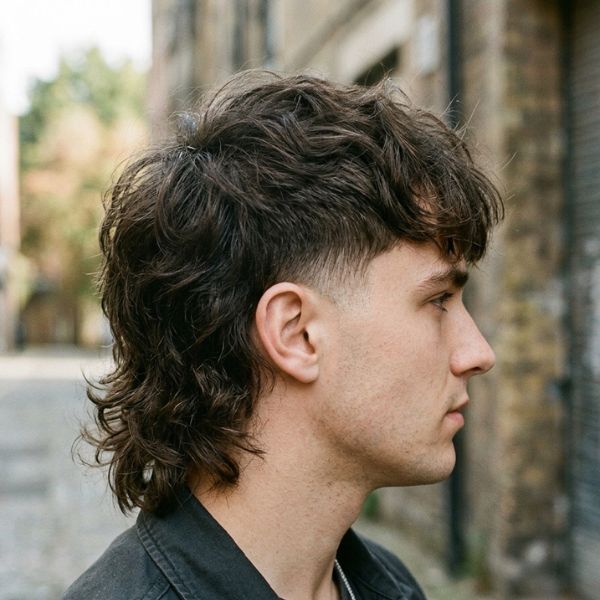
Short, tidy sides, a medium top and a back that sits at the collar. The taper is blended with a guard. It is the safest first choice.
Textured Low Taper Mullet

The barber point cuts the top and back for choppy layers. It looks full of movement and works well on thick hair. Use sea salt spray and matte clay.
Curly Low Taper Mullet

Curls stay at 3 to 4 inches on top, and the back grows into soft curls. The taper keeps the sides from looking wide. Ask the barber to cut the curls dry.
Low Taper Mullet with Fringe

A forward or side swept fringe covers the forehead and softens the front. It suits a receding hairline and gives a more polished look.
Read more: Long French Crop: The Complete Guide to Cuts, Fades and Styling
Low Taper Fade Mullet with Beard

The taper blends into the sideburns and beard, so there is no sudden break. The beard frames the jaw. Ask for a clean neckline and a trimmed beard to keep it neat.
How to Style a Low Taper Mullet
Start with damp hair and use less product than you think you need.
Everyday Casual Style
- Towel dry your hair.
- Spray sea salt spray from roots to ends.
- Blow dry with your fingers, or air dry.
- Rub a pea sized amount of paste through the top.
- Leave the back loose and natural.
Professional Finish
- Apply a light cream or paste to damp hair.
- Comb the top to one side or straight back.
- Tuck the back behind your ears if needed.
- Set with a little light spray.
The taper keeps the sides tidy, which helps the cut look professional.
Messy Textured Look
- Apply texture spray to damp hair.
- Blow dry upward and rough it up with your fingers.
- Use matte clay on the ends and the crown.
- Stop early. A slightly undone finish looks better.
Curly Finish
- Apply curl cream or leave in conditioner to damp hair.
- Scrunch in a small amount of gel or mousse.
- Diffuse on low heat, or air dry.
- Do not brush it when dry. Use your fingers.
Best Hair Products for a Low Taper Mullet
You do not need all of these. Choose by what your hair needs.
Product
- Sea salt spray
- Texture spray
- Matte paste or clay
- Texture powder
- Light mousse
- Curl cream or leave in conditioner
- Sulfate free shampoo and conditioner
- A wide tooth comb
Purpose
- Sea salt spray: adds grip and a grainy, beachy texture.
- Texture spray: gives separation and volume without weight.
- Matte paste or clay: gives hold and definition on the top and ends.
- Texture powder: lifts fine hair at the roots.
- Light mousse: adds body and helps curls clump.
- Curl cream or leave in conditioner: defines curls and fights frizz.
- Sulfate free shampoo and conditioner: cleans gently and keeps the longer back healthy.
- Wide tooth comb: detangles the back without breaking it.
Read more: Long French Crop: The Complete Guide to Cuts, Fades and Styling
Maintenance Tips
Visit Your Barber Every 4 to 6 Weeks
A low taper blended with a guard can go 4 to 6 weeks. If the sides go to the skin, plan on 3 to 4 weeks. As the back grows, ask the barber to keep the length and tidy the neckline.
Wash Hair Properly
Wash two or three times a week. Focus on the scalp and let the shampoo run through the ends. Over washing dries out the longer back.
Condition Regularly
Condition the ends every wash. The back is the oldest hair on your head, and it needs the most care. Detangle gently with a wide tooth comb.
Avoid Heavy Styling Products
Heavy wax and gel weigh the hair down and leave buildup. Use a small amount of light product and wash it out regularly.
Protect Hair from Heat
Limit hot tools, and use low heat when you blow dry. Use a heat protectant if you use a hot tool. Sun can dry the ends too, so a UV protectant helps in summer.
Common Mistakes to Avoid
- Asking for “a mullet” only. Specify the taper, its height and the back length.
- Cutting too much length at the back. Say you are growing it.
- No reference photos. Words are easy to misread, and you cannot see your own back.
- Skipping the neckline. A messy neckline ruins the shape.
- Using too much product. It weighs down the layers.
- Ignoring your hair type. Straight, curly and fine hair need different cuts.
- Waiting too long between trims. The taper loses its shape.
Low Taper Mullet vs Other Popular Mullet Haircuts
The sides decide most of the difference.
Feature
We compare four things: where the fade starts, how much contrast it gives, how often you need a trim, and who it suits best.
Read more: French Crop Low Fade: 20 Styles, Barber Tips, and How to Style It
Low Taper Mullet
- Starts: just above the ear
- Contrast: soft
- Trim: every 4 to 6 weeks
- Best for: a neat, subtle look and work settings
Mid Taper Mullet
- Starts: around the top of the ear
- Contrast: clear and defined
- Trim: every 3 to 4 weeks
- Best for: a sharper outline with a fuller looking top
Burst Fade Mullet
- Starts: curves in a half circle around the ear
- Contrast: strong, with a rounded shape
- Trim: about every 3 weeks
- Best for: a bold look with a longer back
The low taper is the quietest of the three. The burst fade is the boldest.
Pros and Cons of a Low Taper Mullet
Pros
- Neat and subtle
- Works with most hair types
- Easy to grow out
- Fits many workplaces
- Highly adjustable
Cons
- Needs medium length hair
- The grow out stage can look untidy
- Needs regular trims
- The longer back needs more care
- Harder to style on advanced thinning
FAQs: Low Taper Mullet
What is a low taper mullet?
It is a mullet with sides that taper gently from just above the ear, and a longer back.
Is a low taper mullet suitable for all hair types?
It suits most hair types, from straight to curly. Very thin hair is harder to style.
How often should I trim a low taper mullet?
Every 4 to 6 weeks for a blended taper, or every 3 to 4 weeks if it goes to the skin.
Which face shape looks best with a low taper mullet?
Oval and square faces suit it best, and round faces do well with extra height on top.
What products should I use for a low taper mullet?
Sea salt spray, matte paste or clay and a light cream cover most needs. Use curl cream for curls.
Conclusion
The low taper mullet is a neat, flexible way to wear a mullet. The low taper keeps the sides tidy, and the longer back adds personality.
Choose your top style first, then tell your barber the taper height, the lengths and the neckline. Bring photos, use light products and book regular trims. Do that and the cut will look sharp every day.

Noah Daniel Davis is an experienced content writer and hair enthusiast who creates engaging articles about hairstyles, haircuts, hair care, and the latest styling trends. His goal is to share simple, useful, and inspiring hair ideas that help readers discover styles they love.
