

The Mexican mullet haircut is a mullet with short, faded or tapered sides and a longer back, often paired with a textured top.
The name is informal, and it usually points to the sharp, barbershop-built contrast you see in many Mexican American and Latino cuts.
This guide explains what the cut is, which versions are trending, how to match it to your face and hair, what to tell your barber, and which mistakes to avoid.
Understanding the Mexican Mullet Haircut
A mullet is short at the front and sides and longer at the back. The Mexican mullet keeps that shape but cleans it up with precise fades, crisp lines, and a styled top.
There is no official definition. Barbers use the term loosely, so always describe the cut in lengths and fade heights rather than relying on the name alone.
Most versions share these traits:
- Short sides finished with a taper or fade.
- A longer back that sits over the neck or collar.
- A textured, brushed, or swept top.
- A sharp line-up or neckline in many cases.
The modern version drops the thin, stringy tail of the 1980s. Instead, the length is blended with layers so the back looks full and deliberate.
Why the Mexican Mullet Haircut Has Become So Popular
Several things pushed this cut into the spotlight:
- Barbershop skill is the star. Clean fades and exact lines make the cut look fresh in photos and video.
- Social media loves contrast. The sharp side and long back read clearly from every angle.
- It is flexible. You can wear it neat for work or loose on the weekend.
- It suits many textures. Straight, wavy, and curly hair can all carry it.
- The mullet itself is back. Style guides now list modern mullets in fade, taper, curly, and burst variations, which keeps the trend alive in 2026.
Key Features That Make This Haircut Unique
Sharp Contrast Between Front and Back
The main visual hook is the gap between short sides and a longer back. The shorter the sides, the stronger the contrast. A skin fade looks bold. A taper looks softer.
Modern Fade Techniques
Barbers use clippers, guards, and sometimes a razor to blend lengths without hard lines. Common finishes include:
- Taper: shortens only the edges for a gentle look.
- Low, mid, or high fade: sets where the sides start getting short.
- Burst fade: curves around the ear in a half circle and keeps length at the back.
Strong Texture and Movement
The top is usually cut with point cutting or layers so it moves instead of lying flat. This helps thin hair look fuller and thick hair look lighter.
Customizable Styling Options
You can sweep it forward, brush it back, push it up, or let it fall naturally. Small changes in length and product change the mood of the whole cut.
Trending Mexican Mullet Haircut Styles
Taper Fade Mexican Mullet
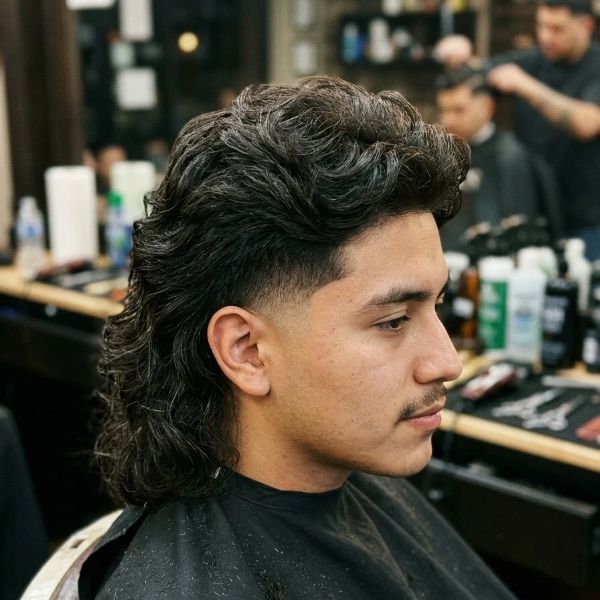
A taper keeps some length at the sideburns and nape while the back stays long. It is the safest choice for work and the easiest to grow out.
Burst Fade Mexican Mullet
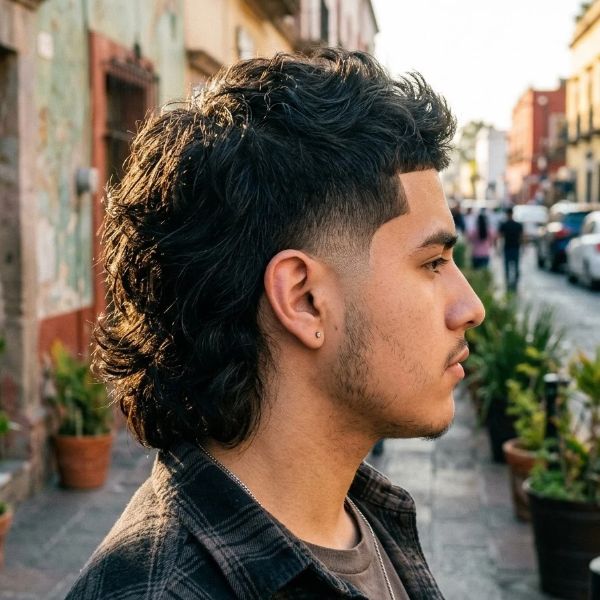
The fade curves around the ear and fades into the neck, leaving the hair behind it longer. It gives a dramatic, rounded shape and suits cuts with a fuller back.
Textured Mexican Mullet

The top is cut choppy with point cutting. Add clay or paste at home for a messy, lived-in finish.
Edgar Mexican Mullet
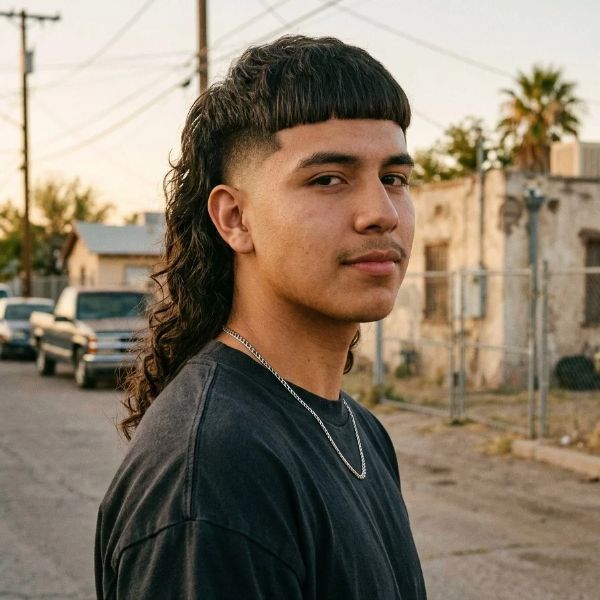
This version mixes the blunt, forward-cut fringe of an Edgar cut with a mullet back. The fringe is short and straight, the sides are faded, and the back stays longer. It is bold and very clean.
Low Taper Mexican Mullet
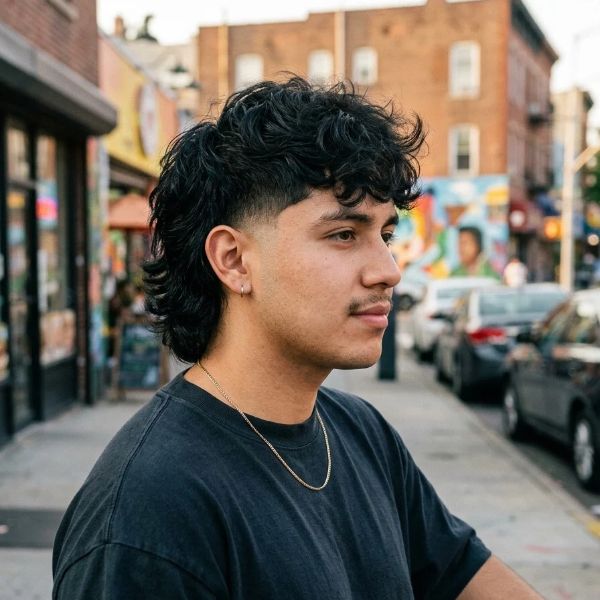
A low taper starts near the ear and stays soft. It leaves more weight on the sides and gives a relaxed shape that ages well between visits.
Curly Mexican Mullet
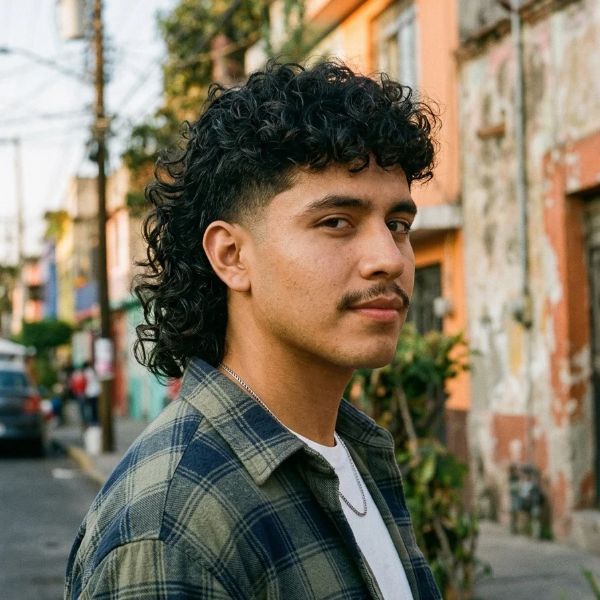
Curls add natural volume at the top and back. Ask for a fade or taper to control the sides, and keep the curl pattern defined with cream.
Wavy Mexican Mullet

Waves give movement without effort. Keep the top medium length and let the back fall in loose layers.
Modern Disconnected Mexican Mullet

The top and back are cut as two separate sections, with a clear step between them and the fade. It looks sharp and graphic, but needs a skilled barber.
Crop Top Mexican Mullet
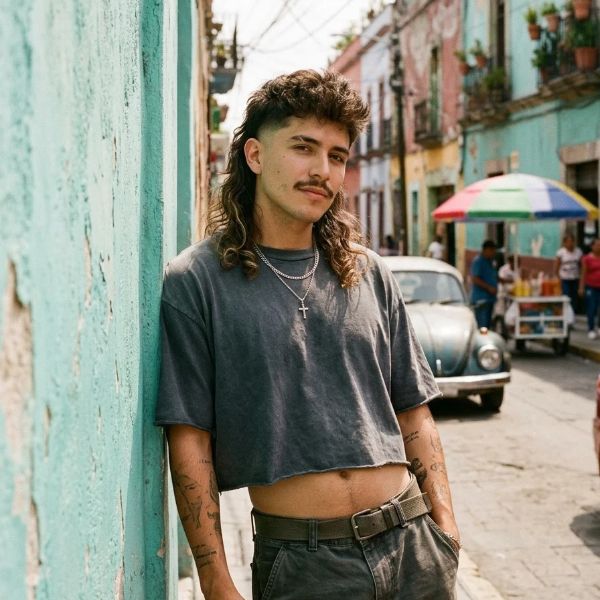
A short, choppy crop on top with a longer back. It shows off the fade and is easy to style in under two minutes.
Slick Back Mexican Mullet
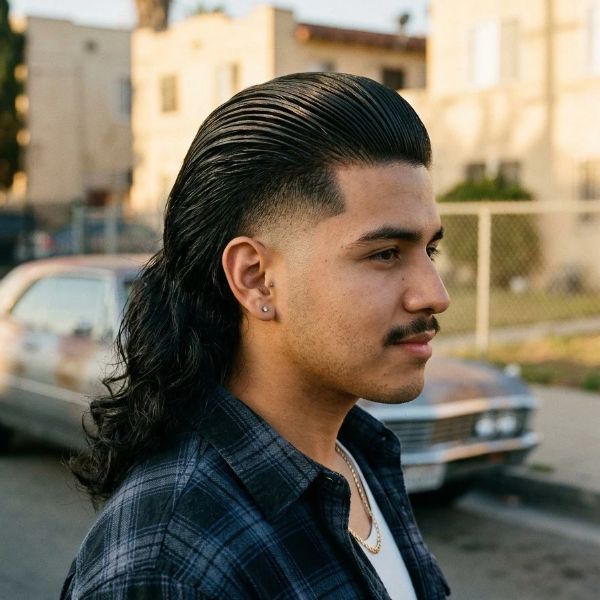
The top is combed back with a medium-hold pomade, and the back flows down. It looks polished, though it works best on hair with some density.
Read more: French Crop Mid Fade: 15 Haircut Ideas, Styling Tips and Barber Guide
Choosing the Right Mexican Mullet for Your Face Shape
Oval Face
Almost every version works. Keep the proportions balanced and avoid hiding the forehead completely.
Round Face
Add height on top and use a taper or fade to slim the sides. A forward, heavy fringe will make the face look rounder.
Square Face
A softer, textured top and a low taper smooth a strong jaw. Avoid very boxy, blunt shapes.
Diamond Face
Bring some fringe forward to widen the forehead. Keep the sides slim so the cheekbones do not look too wide.
Best Hair Types for a Mexican Mullet
| Hair type | What to expect | What to ask for |
|---|---|---|
| Straight | Needs texture to avoid a flat look | Point cutting and layers |
| Wavy | Natural movement, easy to style | Medium top, loose back layers |
| Curly | Plenty of volume and shape | Taper or fade, curl cream |
| Thick | Can look heavy | Internal thinning and layering |
| Fine | Can lose shape fast | Shorter top, volume products |
How to Style a Mexican Mullet Haircut
Follow these steps on damp hair:
- Wash and towel dry. Pat the hair dry. Do not rub.
- Apply sea salt spray. Spray the roots and top for grip and body.
- Blow dry. Use medium heat. Lift the top with your fingers. Curly hair does better with a diffuser.
- Add product. Warm a small amount of clay, matte paste, or texture powder in your palms and work it through the top.
- Shape the top and back. Style the front first, then let the back fall naturally. Comb the back lightly to remove tangles.
- Finish. Use a light hold spray to control frizz.
If you blow dry often, use a heat protectant. Skip heavy gels, which flatten the shape.
Read more: Curly French Crop: 20 Best Haircuts for Men with Curls
Maintenance Tips for Long-Lasting Results
| Cut type | Typical barber visit |
|---|---|
| Skin fade | Every 2 to 3 weeks |
| Low or mid fade | Every 3 to 4 weeks |
| Taper | Every 4 to 6 weeks |
| Burst fade | About every 3 weeks |
More tips:
- Trim split ends at the back so it stays full.
- Wash two to four times a week, not daily.
- Condition the back, which is older and drier hair.
- Do not over-apply product.
- Brush gently to reduce frizz.
Why Barbers Recommend the Mexican Mullet
Barbers like the cut for practical reasons:
- It shows off fade and taper skills.
- It works across hair types and many face shapes.
- It can be dialed up or down for different clients.
- It gives clients something fresh without being extreme.
A good barber will also tell you what to avoid.
Common Errors to Avoid
- Asking only by name. The term is loose. Give lengths and fade heights.
- Choosing the wrong fade. A skin fade needs frequent upkeep. A taper is easier.
- Cutting the back too thin. It can look stringy. Ask for layers to add shape.
- Ignoring your hair texture. Fighting natural waves or curls leads to frizz.
- Skipping the neckline. A messy neckline ruins the sharp contrast.
- Overusing shiny product. It flattens texture.
- Waiting too long to trim. The sides lose their shape first.
What to Say in the Chair
Try this script:
- “I want a mullet with a [taper or fade] starting at [low, mid, or high].”
- “Keep the top about [3 to 4] inches and the back around [5 to 6] inches.”
- “Point cut the top for texture.”
- “Clean up the neckline.”
Bring photos from the front, side, and back.
Read more: French Crop Mid Fade: 15 Haircut Ideas, Styling Tips and Barber Guide
FAQs: Mexican Mullet Haircut
What is a Mexican mullet haircut?
It is a mullet with faded or tapered sides and a longer back. The term is informal, so describe the lengths to your barber.
Is a Mexican mullet suitable for all hair types?
It works on straight, wavy, curly, thick, and fine hair with small changes in layering and styling.
How often should a Mexican mullet be trimmed?
Every 3 to 6 weeks, depending on the fade. Skin fades need the most frequent trims.
What is the difference between a classic mullet and a Mexican mullet?
A classic mullet usually has little blending. A Mexican mullet normally has a sharper fade or taper, cleaner lines, and a styled top.
Does a Mexican mullet require daily styling?
Not much. Two to five minutes with sea salt spray and a matte product is enough for most people.
Conclusion
The Mexican mullet haircut is popular because it combines sharp fades with relaxed length.
Pick a taper or fade that matches your routine, choose a version that suits your face and hair, and use clear lengths when you talk to your barber.
Avoid the common errors, trim on schedule, and use matte products. With those basics in place, the cut looks fresh in 2026 and stays easy to live with.

Noah Daniel Davis is an experienced content writer and hair enthusiast who creates engaging articles about hairstyles, haircuts, hair care, and the latest styling trends. His goal is to share simple, useful, and inspiring hair ideas that help readers discover styles they love.
