
A long modern mullet keeps the sides neat and the back length flowing, then blends the two with a fade, taper, or soft layers so the shape looks planned instead of accidental. In 2026 the cut has moved well past its retro reputation.
Barbers now treat it as a precision style with a sculpted crown, controlled sides, and a nape that suits office life as easily as a night out. This guide shows what the cut is, gives 20 variations with the hair types they suit, and lists styling steps, face shape advice, and mistakes that make a mullet look dated. Use it to walk into the barbershop with clear words and a clear plan.
What Is a Long Modern Mullet?
A long modern mullet is a haircut with shorter sides and a longer back, styled with a clean fade or taper and a textured top. It is the updated version of the classic “business in the front, party in the back” shape.
According to Pall Mall Barbers, a London barbershop, a modern mullet needs three things: a clean fade, a defined shape, and styling flexibility. Their 2026 guide describes the cut as precise, with faded or tapered sides, a sculpted crown, and soft length at the back.
Here is what separates the modern version from the 1980s original:
- Cleaner sides: Fades and tapers replace the rough, uneven sides of the old style.
- Softer transition: The jump from short to long is blended, though some versions keep a deliberate gap, known as disconnected lengths.
- Textured crown: Layers add movement and volume on top.
- Controlled back length: The nape usually sits around the collar, not down the back.
Barber advice quoted by Man of Many, an Australian men’s style publication, is to keep the length long enough to sit comfortably behind the ears without heavy product. That is a useful rule for beginners.
20 Long Modern Mullet Hairstyles for Men
Each style below includes who it suits and one practical tip. Pick the one that matches your hair type and daily routine.
Textured Long Modern Mullet

This version uses point cutting, which means the barber snips into the ends to create a broken, lived-in finish. It works well on medium to thick straight or wavy hair. Apply a matte texture paste to dry hair and twist the ends for definition.
Taper Fade Long Mullet

A taper fade shortens the hair gradually down the sides and neckline, leaving the back long. It looks sharp without being extreme. Ask for a low or mid taper if you want a clean look that still works in a professional setting.
Curly Long Modern Mullet
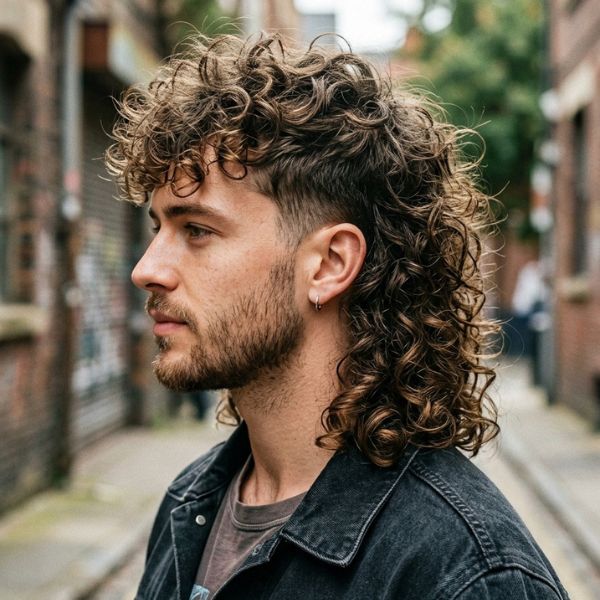
Curls make a mullet look full and natural. The barber leaves extra length on top and at the nape so the curl pattern can form. Use a curl cream on damp hair and avoid brushing once dry, since brushing causes frizz.
Straight Sleek Long Mullet

Straight hair gives a smooth, polished mullet with a glossy finish. It suits fine to medium hair. A light serum and a blow dryer on low heat will keep the back flat and shiny.
Messy Long Mullet

This is the relaxed option. Hair is left piecey and uneven by design, with little styling effort. Rub a small amount of sea salt spray through damp hair, then let it dry naturally.
Layered Long Mullet

Layers remove weight and add shape. The top is cut shorter than the back, which creates a rounded outline. This style helps thick hair that tends to puff out at the sides.
Shaggy Long Mullet

The shaggy mullet blends the mullet with the wolf cut, a trend known for heavy layers and a choppy outline. It suits men with thick or wavy hair who want a rock-inspired look. Ask for long layers around the crown and a feathered back.
Low Fade Long Mullet
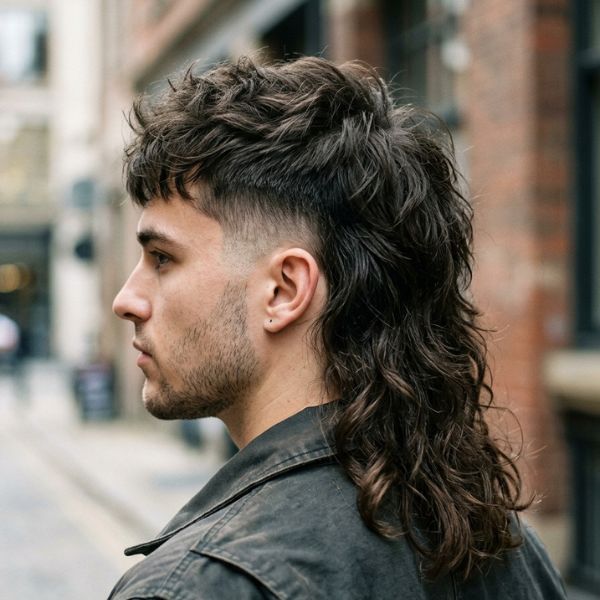
A low fade starts just above the ears and around the neckline. It keeps the style tidy while letting the top and back stay full. This is a safe pick for first-time mullet wearers.
High Fade Long Mullet

A high fade begins higher on the head, creating strong contrast with the longer top and back. It is bold and graphic. Expect a trim every two to three weeks to keep the fade crisp.
Read more: 15 Best French Crop Mullet Haircuts for Men
Undercut Long Mullet

An undercut shaves or clips the sides very short with no gradual blend. Paired with a long back, the contrast is dramatic. It works best on thick hair, since the top can cover the shaved section when you want a softer look.
Wavy Long Modern Mullet

Natural waves add movement without much effort. The cut follows the wave pattern so the ends flip and curve on their own. Use a lightweight mousse and diffuse the hair dry for soft, even waves.
Long Fringe Mullet
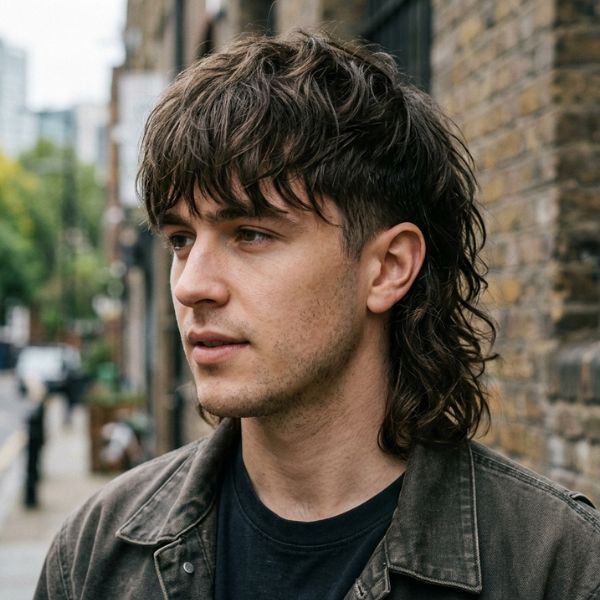
This style keeps a longer fringe, the front section of hair over the forehead, and pairs it with a long back. It suits oval and long face shapes. Sweep the fringe to the side or let it fall forward for a softer line.
Slick Back Long Mullet

Hair is combed back from the forehead and flows into the longer nape. It looks refined and works well for formal events. Use a medium-hold pomade and a fine comb, and avoid piling on product.
Blowout Long Mullet

A blowout uses a blow dryer and brush to build volume and smooth movement. It suits straight and wavy hair. Dry the top upward and back, then finish with a light-hold spray.
Modern Punk Mullet

This cut borrows from punk fashion with sharper edges, uneven layers, and a stronger contrast between the top and back. It suits men who like a bold look. Matte clay holds the shape without shine.
Soft Natural Long Mullet

This is the quiet version. The transition is gentle, the sides are only lightly tapered, and the style relies on your natural texture. It is a good choice for workplaces with a conservative dress code.
Razor Cut Long Mullet
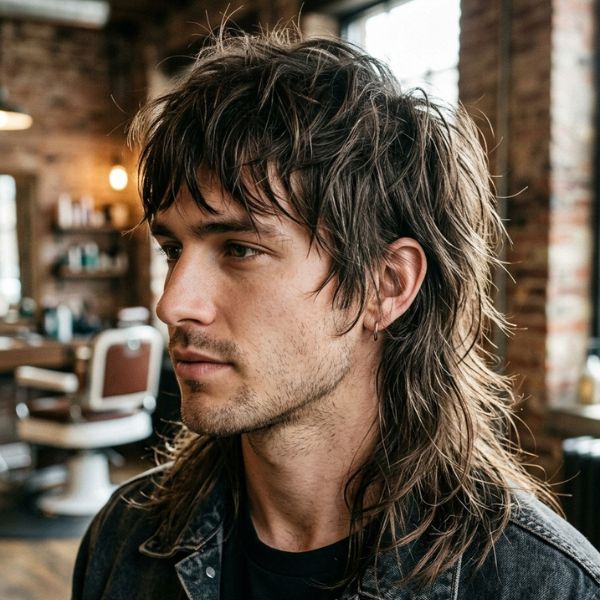
A barber uses a razor instead of scissors to slice the ends, which gives a feathered, wispy edge. It looks best on straight to slightly wavy hair. Avoid it on very dry or damaged hair, since razor cutting can make ends look frayed.
Wet Look Long Mullet

A wet look uses gel or a shine cream to create a glossy, defined finish. It suits evenings and events. Apply to towel-dried hair and comb through for an even hold.
Tied Back Long Mullet

Once the back reaches past the collar, it can be tied into a small low ponytail or half-up knot. The short sides stay loose and neat. This is practical for gym sessions or hot weather.
Volume Heavy Long Mullet
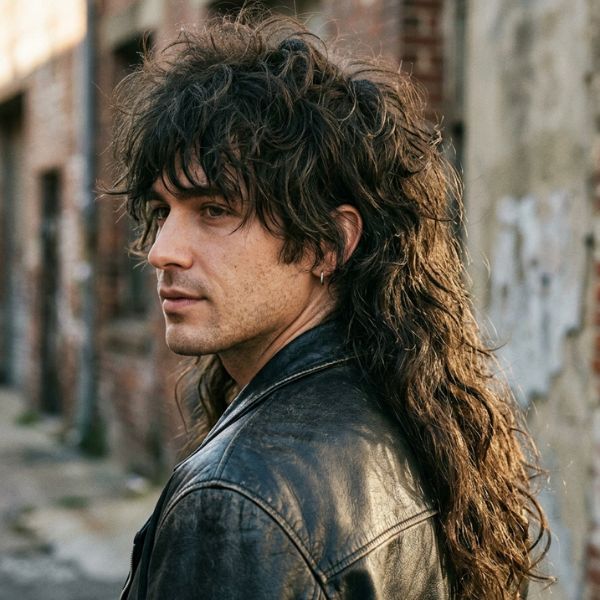
This style builds height on top and fullness at the back. It suits thick hair or men who want a larger shape. A blow dryer, a volumizing spray, and a layered cut do most of the work.
Read more: 15 Best Messy French Crop Haircut Ideas for Men
Who Should Try a Long Modern Mullet
| Hair or Face Type | Best Mullet Style | Why It Works |
| Thick, straight hair | Layered or Taper Fade | Layers remove weight and keep the shape tidy |
| Curly hair | Curly Long Modern Mullet | Extra length lets curls form fully |
| Fine, straight hair | Straight Sleek or Slick Back | Smooth lines make thin hair look denser |
| Wavy hair | Wavy or Shaggy | Natural movement needs little styling |
| Oval face | Almost any style | The balanced shape handles most lengths |
| Round face | High Fade or Undercut | Shorter sides add height and structure |
| Square face | Soft Natural or Textured | Softer edges balance a strong jawline |
- Not everyone will want the commitment, so consider these points before booking:
- Lifestyle: If you need a very conservative look daily, a soft natural or low fade version is safer.
- Hair density: Very thin or receding hair can limit volume on top.
- Patience: The back takes months to grow, and the in-between stage can feel awkward.
Styles of this kind are also popular with public figures. Daimon Barber, a men’s grooming brand, notes that actors such as Jacob Elordi, an Australian actor known for TV and film roles, often wear mid-length textured hair in a similar spirit.
Read more: 15 Best French Crop Mullet Haircuts for Men
Styling Tips for Long Modern Mullet
Good styling takes only a few minutes once you know the steps. Follow this routine for most versions of the cut.
- Wash with a gentle shampoo two to four times a week. Over-washing dries out longer hair.
- Condition the back and ends because they are the oldest, most fragile parts of the hair.
- Towel dry gently by pressing, not rubbing, to limit frizz.
- Apply the right product to damp hair: sea salt spray for texture, mousse for waves, cream for curls, pomade for slick styles.
- Blow dry the top upward and back for volume, and let the back dry naturally.
- Finish with matte paste or clay on the top and ends for shape and separation.
A few extra habits help the cut last:
- Use a wide-tooth comb on wet hair to avoid breakage.
- Sleep on a silk or satin pillowcase if your back length tangles overnight.
- Keep the neckline clean between visits with a quick tidy-up from your barber.
- Use a light heat protectant before using a blow dryer or straightener.
Common Mistakes to Avoid
Most “bad mullets” come from a small set of errors. Avoid these and your cut will look deliberate.
- Skipping the barber brief: Saying “give me a mullet” is too vague. Describe the fade type, top length, and back length, or bring a photo.
- Letting the back grow too long, too fast: Uneven growth creates a stringy look. Trim the ends every eight to ten weeks.
- Ignoring the neckline: A messy nape makes the whole style look unfinished.
- Using too much product: Heavy gel or wax weighs the hair down and makes it look greasy.
- Choosing a style that clashes with your hair type: Fine hair rarely holds a volume-heavy shape, and tight curls can look puffy if cut too short on top.
- Skipping conditioner: Dry, split ends are more visible on longer hair.
- Copying a photo exactly: Hair density and growth direction differ for everyone, so ask your barber what is realistic.
FAQs-Long Modern Mullet
Is the long modern mullet still in trend?
Yes. Barbers and style publications in 2026 still list the modern mullet among the top men’s cuts, mainly because fades and textured layers keep it looking current.
How often should I trim a mullet?
Trim the sides and neckline every three to four weeks, and the back ends every eight to ten weeks. High fades may need visits every two to three weeks.
Can I style a mullet without products?
Yes. A good cut, a gentle blow dry, and natural texture are enough for soft or wavy versions. Products only add hold and definition.
Is this hairstyle suitable for everyday use?
Yes. Low fade and soft natural versions fit most offices, and longer versions can be tied back for sport or heat.
What makes a mullet look modern instead of outdated?
Clean fades, a blended shape, light texture, and a controlled back length. Outdated mullets have uneven sides, heavy bulk, and no clear shape.
Conclusion
The long modern mullet works in 2026 because it is flexible. You can keep it quiet with a low taper and soft layers, or push it with a high fade and punk edges.
The key is a clear brief for your barber, a cut that matches your hair type, and steady upkeep between visits.
Start with the style from the list that best fits your hair and routine. Book a consultation, bring a reference photo, and ask your barber how the back will grow out over the next few months.
Small, regular trims and a simple styling routine will keep the cut sharp and looking intentional.

Noah Daniel Davis is an experienced content writer and hair enthusiast who creates engaging articles about hairstyles, haircuts, hair care, and the latest styling trends. His goal is to share simple, useful, and inspiring hair ideas that help readers discover styles they love.
