

The Australian mullet is a mullet with short, neat sides and a longer, often shaggy back. Modern versions blend the lengths with tapers, fades, and layers, so the cut looks sharp instead of dated.
Below you will find 20 ideas, how to choose one for your face shape and hair type, what to say to your barber, and a simple care plan.
Quick answer: an Australian mullet is short on top and sides, long at the back, and finished with a taper or fade. The exact lengths vary, so always describe the cut in inches and fade heights when you book.
Why Is the Australian Mullet Haircuts So Popular?
The mullet has strong ties to Australian culture. Local press has covered its revival for years, and Australian outlets even use nicknames like “skullet” for edgier versions. Celebrity looks and sports fans have kept it visible.
Barbers and style guides also list modern mullets as a major trend, with fade, taper, curly, and shaggy variations. That wide range means almost anyone can find a version that fits.
Three things explain the current appeal:
- It stands out. The contrast between front and back is easy to spot.
- It is flexible. Short, long, curly, straight, and faded versions all exist.
- It is nostalgic but updated. Modern fades and texture remove the 1980s feel.
Key Benefits of an Australian Mullet
- Works with many hair textures.
- Gives you room to experiment with length.
- Suits casual and creative settings, and softer versions work in offices.
- Grows out in stages, so you can adjust over time.
- Needs only a few minutes of styling.
How to Choose the Right Australian Mullet
Pick by face shape first, then by hair type.
Face Shape
- Oval: most styles work, so choose by taste.
- Round: add height on top and keep the sides slim with a fade.
- Square: soft layers and a textured top reduce a strong jaw.
- Long or oblong: keep the top short and the sides fuller.
- Heart: a fringe balances a narrow chin.
- Diamond: keep the sides tapered and add some forward texture.
Hair Type
- Straight: needs texture cutting and a light product to avoid a flat look.
- Wavy: the easiest match, with natural movement.
- Curly: adds volume and shape, so keep curls defined with cream.
- Thick: ask for internal layers to remove weight.
- Fine: keep the back slightly shorter so it does not look thin.
20 Australian Mullet Haircuts
Here is what to say to your barber for any of the styles below:
- “Short on top and sides, longer at the back.”
- “A [taper, low fade, or burst fade] on the sides.”
- “About [3 to 4] inches on top and [5 to 6] inches at the back.”
- “Point cut the top and add layers to the back.”
- “Clean up the neckline.”
Bring photos from the front, side, and back. The back view matters most, because it shows the shape of the tail.
Classic Australian Mullet Haircuts

Short front and sides, long back. Minimal blending and a relaxed finish. It has a retro vibe and suits straight to wavy hair.
Modern Australian Mullet Haircuts

The same shape with blended layers and a clean neckline. Ask for the back to sit just over the collar, not past the shoulders.
Taper Fade Australian Mullet

The sides shorten gradually from the ear to the neck. It is the safest, most polished option for work and everyday wear.
Burst Fade Australian Mullet

The fade curves in a half circle around the ear and leaves length at the back. It makes the mullet shape look deliberate and strong.
Low Fade Australian Mullet

The fade starts low near the ear. It is subtle and easy to maintain.
High Fade Australian Mullet
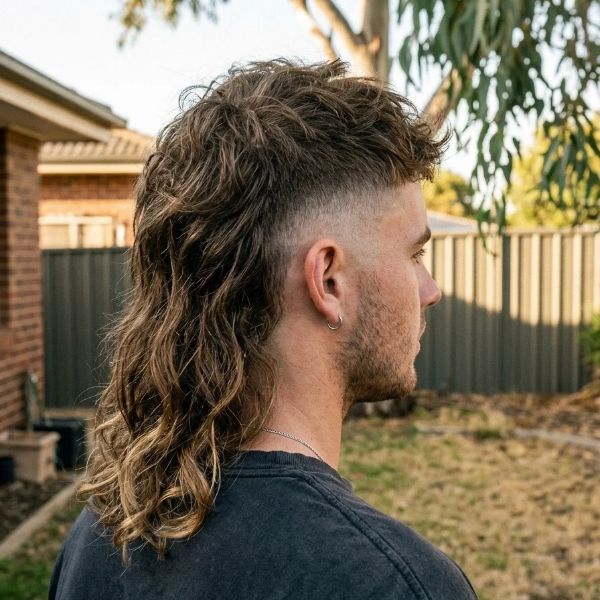
The fade starts high on the head, giving the strongest contrast. It looks bold, but it needs frequent trims.
Textured Australian Mullet

The top is point cut so it breaks into pieces. Style with sea salt spray and clay for a lived-in finish.
Curly Australian Mullet

Curls on top and at the back create a full, natural shape. Keep the sides faded so the curls stay the focus.
Wavy Australian Mullet

Loose waves flow from the crown to the nape. Let them air dry for an easy, beachy look.
Shaggy Australian Mullet

Heavy layers and a messy, choppy outline. It is closer to a wolf cut, but keeps the clear short top and long back.
Short Australian Mullet

A shorter back, around 3 to 4 inches. It is a good first step if you are not ready for a long tail.
Long Australian Mullet

The back reaches the shoulders or beyond. Condition it often so the ends stay healthy.
Aussie Mullet with Beard

A mullet with a trimmed beard gives a rugged, balanced look. Blend the sideburn and fade into the beard line.
Razor Cut Australian Mullet

A razor adds feathered, soft ends. It works best on medium to thick hair, and is not ideal for very dry or frizzy hair.
Modern Sporting Australian Mullet
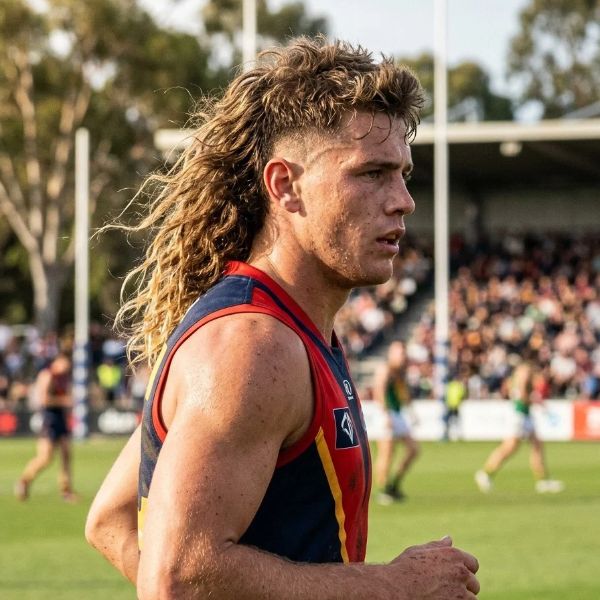
A neat, athletic style with tidy sides and a medium back. It suits active routines, and it tucks under a cap or headband.
Undercut Australian Mullet
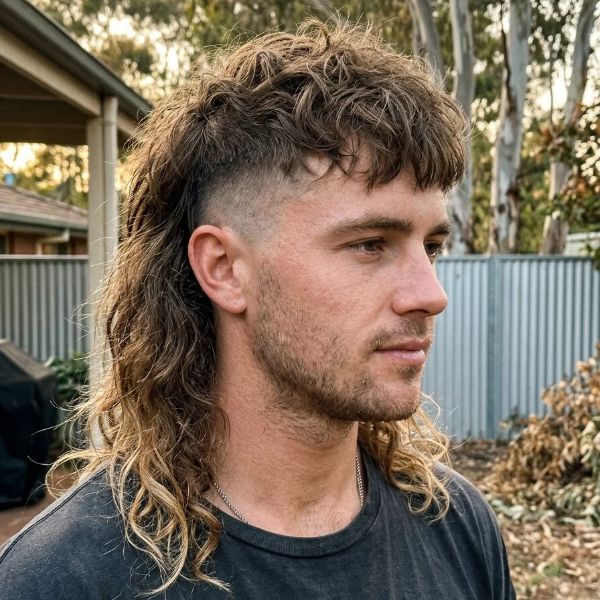
The sides are cut very short with a disconnected line from the top. It is bold and sharp, but grows out with a visible step.
Messy Australian Mullet

A tousled finish with uneven layers. Use texture powder or paste and avoid combing it smooth.
Fringe Australian Mullet

A forward, choppy fringe over the forehead, with a long back. It suits those who want to cover a high forehead.
Wolf Cut Australian Mullet

A blend of wolf cut layers and mullet shape, with a fuller crown and a shaggy back. It adds the most volume of the group.
Retro Australian Mullet

A feathered, 1980s inspired look with a longer back and a soft top. Keep it clean with a modern taper to avoid looking costume-like.
Styling Tips for an Australian Mullet Haircuts
Recommended Styling Products
- Sea salt spray: adds grip and texture.
- Matte clay or paste: gives hold with no shine.
- Texture powder: lifts fine hair.
- Curl cream: defines curls and reduces frizz.
- Leave-in conditioner: keeps the long back soft.
- Heat protectant: use before blow drying.
Daily Styling Advice
The goal is a controlled top with a natural, flowing back. Keep products light, because heavy gel makes the back look greasy.
- Start with damp hair. Towel dry gently.
- Apply a base. Use sea salt spray or curl cream.
- Dry the top first. Lift the roots with your fingers or a diffuser.
- Add a small amount of product. Work it through the top and ends.
- Let the back fall naturally. Do not over-brush.
Australian Mullet Haircuts Maintenance Guide
Mullets look best when the sides stay neat and the back stays healthy. The sides lose their shape first, and the back needs moisture because it is the oldest hair on your head.
- Trim the sides and neckline regularly.
- Trim the back lightly every few months to avoid split ends.
- Wash two to four times a week.
- Condition the lengths after every wash.
- Brush gently from the ends up.
- Use a satin pillowcase or tie your hair loosely at night to reduce tangles.
Maintenance Schedule
| Style | Barber visit |
|---|---|
| Skin or high fade mullet | Every 2 to 3 weeks |
| Low or mid fade mullet | Every 3 to 4 weeks |
| Taper mullet | Every 4 to 6 weeks |
| Longer shaggy mullet | Every 6 to 8 weeks |
Who Should Try an Australian Mullet?
It suits you if you:
- Want a haircut that stands out.
- Do not mind a short styling routine.
- Have enough hair to grow a back section.
- Are comfortable with regular trims.
It may not suit you if you want very short hair, a strict dress code, or no styling at all.
Common mistakes to avoid:
- Letting the back grow without trims. Split ends make it look stringy.
- Skipping the fade or taper. Without blending, the cut can look dated.
- Using too much product. It weighs down the shape.
- Ignoring hair texture. Work with your waves or curls, not against them.
- Choosing a style that clashes with your face shape. Use the guide above before you book.
FAQs- Australian Mullet Haircuts
Is an Australian mullet suitable for professional settings?
Yes, with a taper, a shorter back, and neat styling. Avoid very messy or very long versions.
Which fade works best with an Australian mullet?
A taper or low fade is the safest, while a burst fade gives the most dramatic shape.
Does a mullet work with curly hair?
Yes. Curls add natural volume, and a faded side keeps the shape neat.
How often should I trim my Australian mullet?
Every 3 to 6 weeks for the sides, depending on the fade. Trim the back every few months.
Conclusion
The Australian mullet works because it combines clear contrast with room for personal style. Choose a version that fits your face shape and hair type, ask your barber for a clean taper or fade, and decide how long you want the back.
Style it with light products, trim it on schedule, and look after the lengths. Then it looks modern, not like a throwback.

Noah Daniel Davis is an experienced content writer and hair enthusiast who creates engaging articles about hairstyles, haircuts, hair care, and the latest styling trends. His goal is to share simple, useful, and inspiring hair ideas that help readers discover styles they love.
