

A French crop low taper is a short, textured top with a blunt fringe, paired with sides that shorten gently from just above the ear.
It looks neat, takes about two minutes to style and suits most hair types. That mix is why barbers cut it every day.
The name hides a lot of choices, though. The top can be short, long, messy or curly. The taper can end with a guard or fade closer to the skin. Without a plan, you can leave the chair with something close but not right.
This guide explains what the cut is and why it is so popular. It lists 20 styles, compares the crop with the taper, and gives you a barber script. You will also find styling tips and upkeep timing.
What Is a French Crop Low Taper?
A French crop low taper combines two separate ideas:
- French crop: a short top, usually 1 to 3 inches, with a blunt fringe cut straight across the forehead.
- Low taper: hair on the sides and at the neckline gets shorter gradually. It starts low, just above the ear, and ends at the natural hairline.
The crop shapes the top, and the taper shapes the sides. A taper is softer than a skin fade. It keeps some length at the edges, so the cut looks clean without looking shaved.
The French crop is said to have come from 1920s France. Today it is a fashion staple and works on most heads.
Why Is the French Crop Low Taper So Popular?
Five things keep it popular:
- Quick styling. A little matte clay and your fingers are enough.
- Subtle contrast. The low taper is the quietest option, so it fits work and weekends.
- Covers the front. The fringe hides a high forehead or a receding hairline.
- Works on many textures. Straight, wavy and curly hair all suit it.
- Grows out slowly. A low taper blurs gently, so a late trim does not show much.
20 Sharp Styles of French Crop Low Taper Every Man Should Try
Pick two or three. Save photos from the front, side and back.
1. Classic French Crop Low Taper

About 1.5 to 2 inches on top, a blunt fringe and a low taper. It is the safest first choice.
2. French Crop Low Taper Fade
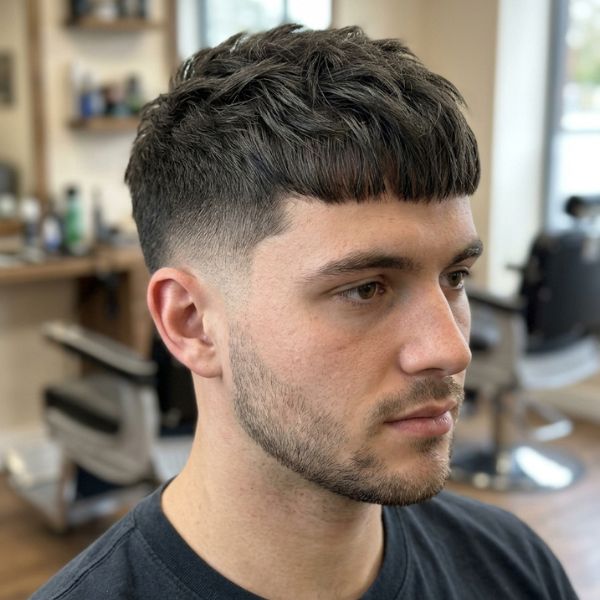
The taper drops closer to the skin at the bottom. It gives a little more contrast while staying soft.
3. Textured French Crop Low Taper Fade

Point cutting adds choppy layers and movement. It works well on thick hair. Use matte clay.
4. Messy French Crop Low Taper Fade

Pieces point in different directions on purpose. Use sea salt spray and a little paste, then stop early.
5. Short French Crop Low Taper

An inch or less on top with a short fringe. It is the lowest effort version and works well for fine hair.
6. French Crop Low Taper Wavy Hair

Waves give natural texture. Use a light cream and air dry or diffuse.
7. French Crop Low Taper Straight Hair

Straight hair gives the sharpest fringe. Ask for layers so the top does not fall flat.
8. French Crop Low Taper for Curly Hair
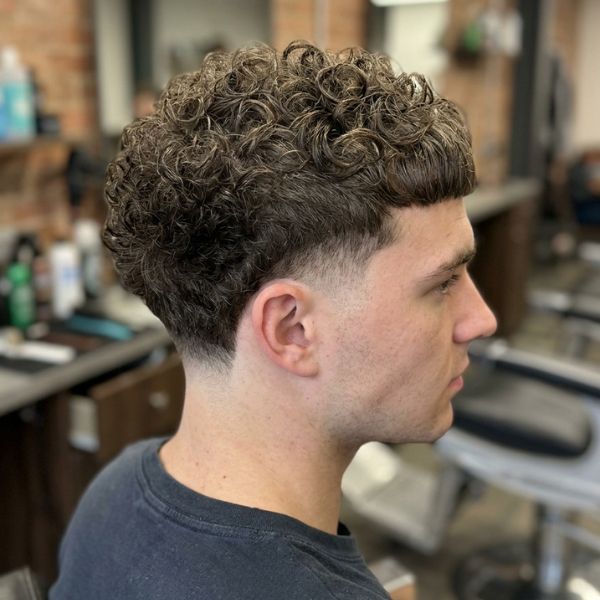
Keep curls at 2 to 3 inches so they fall forward. The taper controls the width. Ask the barber to cut dry.
Read more: Long French Crop: The Complete Guide to Cuts, Fades and Styling
9. French Crop Low Taper Thick Hair
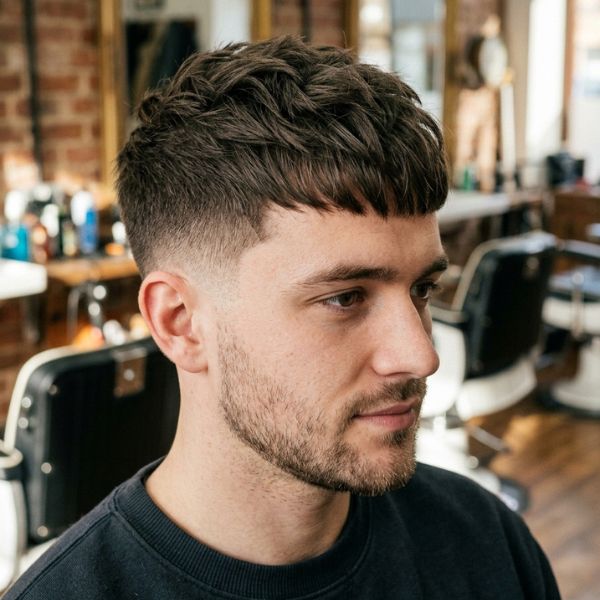
Thick hair needs thinning or point cutting to remove bulk. A strong clay holds the shape.
10. French Crop Top Low Taper
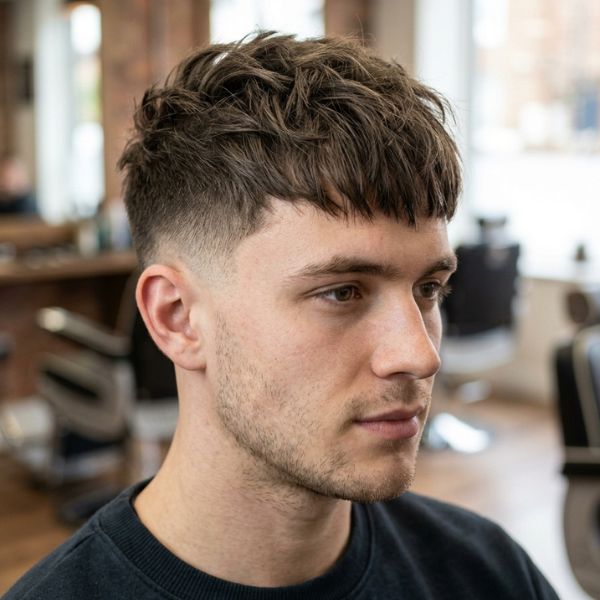
A flat, neat top with a tidy fringe. The top looks like a “crop top.” It is simple and clean.
11. French Crop Low Taper Textured Fringe

The fringe is cut ragged and broken. It looks softer than a blunt line and suits a high forehead.
12. Low Taper Mullet French Crop
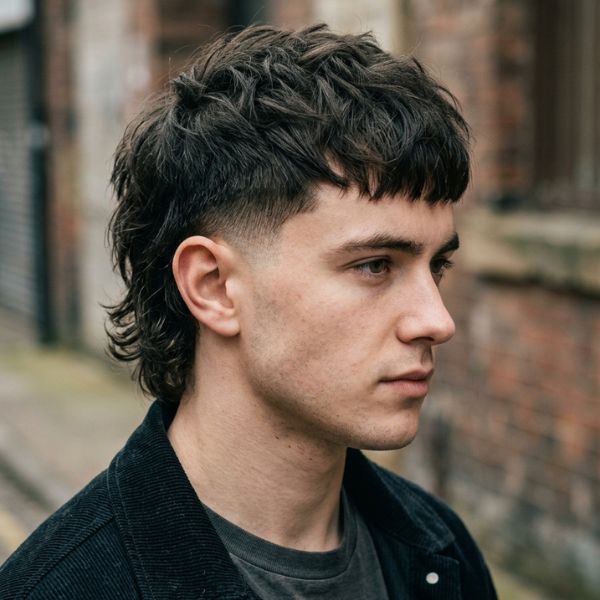
A short crop at the front with a longer back and a low taper on the sides. Tell the barber how much back length to keep.
13. Modern French Crop Low Taper
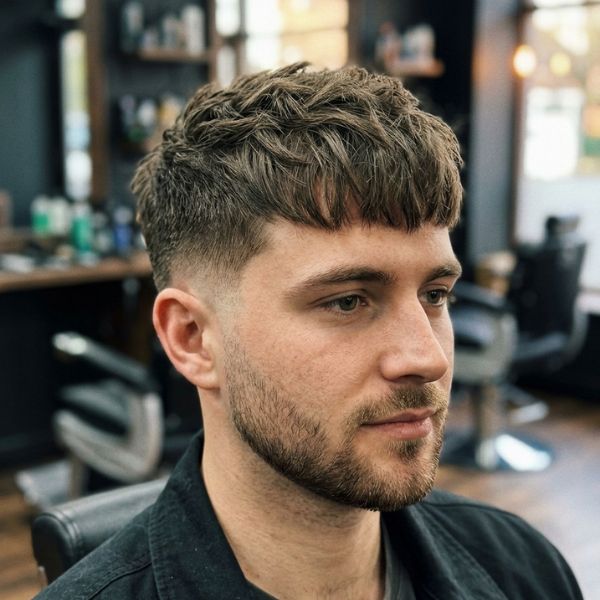
Soft layers, a slightly longer fringe and a clean blend. No harsh lines. It fits most workplaces.
14. Long French Crop Low Taper

Three inches or more on top, with layers. It can be pushed forward or to the side. It needs more product.
15. French Crop Low Taper with Beard

Blend the taper into the sideburns and beard so there is no break. Keep the beard trimmed. Avoid thick sides on a round face.
16. French Crop Low Taper for Round Face

Use a point cut, angular fringe and some height on top. Avoid a heavy fringe cut straight across, which can make the face look wider.
17. French Crop Low Taper with Skin Fade
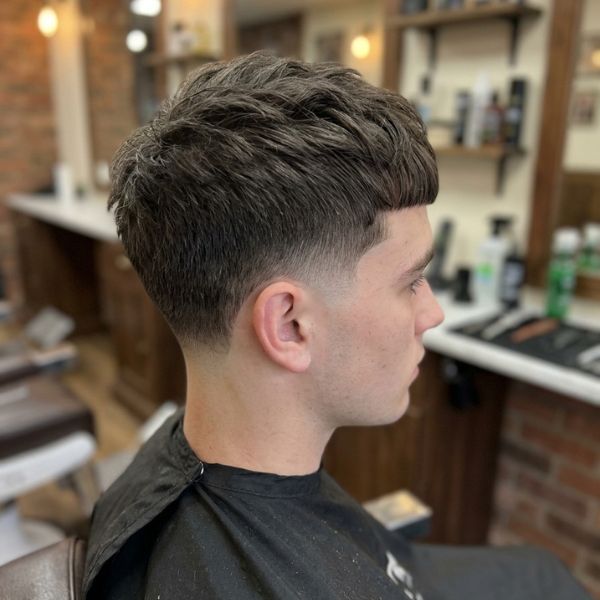
The bottom of the taper goes to bare skin. The contrast is bold and crisp, but it needs frequent trims.
18. French Crop Low Taper with Line Up
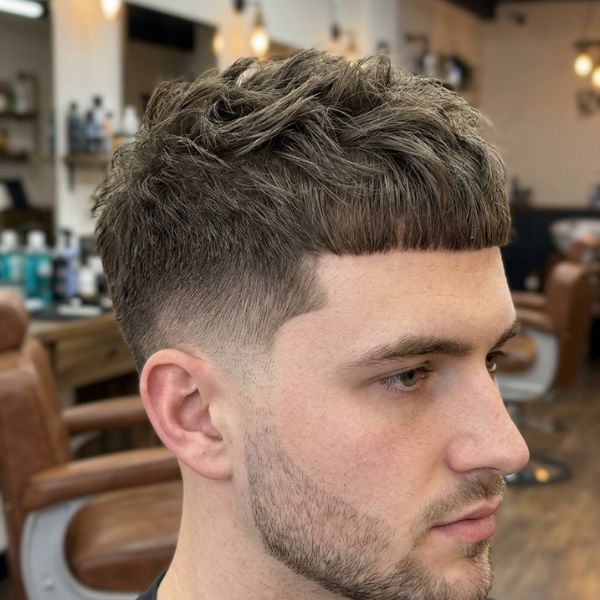
A clean line along the hairline and temples sharpens the cut. Ask for a natural line up, not a hard one.
19. French Crop Low Taper for Receding Hairline

A forward fringe covers the temples. Keep it short if the recession is deep. Use matte clay, not glossy gel.
20. French Crop Low Taper with Design

A small line or pattern shaved into the taper adds detail. Keep it simple, because it needs touch ups.
Read more: 15 Best Textured French Crop Haircut Styles in 2026
French Crop vs Low Taper Fade: Which One Should You Choose?
| French Crop | Low Taper Fade | |
|---|---|---|
| Part of the head | Top and fringe | Sides and back |
| Signature feature | Blunt, straight fringe | Gentle blend from just above the ear |
| Can stand alone | Yes, with any side cut | Yes, with any top |
| Key choice | Fringe and top length | Taper depth |
How to Ask Your Barber
Barbers cut the sides and back, which a front selfie does not show. Be clear about three things.
Discuss fringe or top texture
Say whether you want the fringe blunt, ragged or angular. Say how much texture you want. Point cutting gives movement. A cleaner cut gives a neater line.
Show a photo of your desired style
Bring three photos: front, side and back. Choose someone with similar hair. Point out what you like, such as the fringe or the taper line.
Specify the length of the top and fade
Use inches for the top, such as “about 2 inches.” For the taper, say “low, starting just above my ear, blended with a guard.” Ask for a natural neckline.
Read more: French Crop Burst Fade: Best Haircut Ideas for Men
Styling Tips
Use the Right Styling Products
- Matte clay: gives strong hold and a dry finish.
- Light paste: gives flexible hold and is easy to restyle.
- Sea salt spray: adds grip, especially for fine hair.
- Texture powder: lifts hair at the roots.
- Avoid heavy wax and glossy gel. They weigh the top down.
Style Straight Hair Properly
- Towel dry until damp.
- Spray sea salt spray from roots to ends.
- Blow dry forward on medium heat with your fingers.
- Warm a pea sized amount of paste in your palms.
- Push the fringe forward and break it into pieces.
Work With Your Natural Curls
Apply curl cream on damp hair and scrunch. Diffuse on low heat or air dry. Do not brush it when dry. Use your fingers to shape the fringe.
Keep Up with Regular Trims
Plan a visit about every 3 to 4 weeks for a blended low taper. If the taper goes to the skin, plan on 2 to 3 weeks. Trim the fringe whenever it touches your eyebrows. You can stretch to 5 weeks, but the lines will soften.
Create a Relaxed Messy Look
Apply sea salt spray. Blow dry with your fingers, then rub a little clay on the ends and pinch them into pieces. Stop early. A slightly undone finish looks more natural.
Conclusion
The French crop low taper is short, neat and easy to wear. The crop gives the top its shape, and the low taper keeps the sides tidy and soft.
Pick your top style first, then decide how deep the taper goes. Bring photos, say the lengths in inches and book regular trims. Do that and the cut will look sharp every day.
FAQs
What is a French crop low taper?
It is a short, textured top with a blunt fringe and sides that taper gently from just above the ear.
Is a French crop low taper good for thin or receding hair?
Yes. A forward fringe covers the temples and the texture adds fullness. Keep it short if the recession is deep.
Does a French crop low taper suit curly hair?
Yes. Keep the curls at 2 to 3 inches and use the taper to control the width.
How often should I trim a French crop low taper?
Every 3 to 4 weeks for a blended taper. Every 2 to 3 weeks if it goes to the skin.
What is the difference between a French crop and a low taper?
A French crop is the top and fringe. A low taper is how the sides and neckline are blended.
Does a French crop low taper work for a round face?
Yes, with an angular fringe and some height on top. Avoid a heavy fringe cut straight across.
What product is best for a French crop low taper?
Matte clay or light paste gives the best texture. Sea salt spray helps fine hair.

Noah Daniel Davis is an experienced content writer and hair enthusiast who creates engaging articles about hairstyles, haircuts, hair care, and the latest styling trends. His goal is to share simple, useful, and inspiring hair ideas that help readers discover styles they love.
