

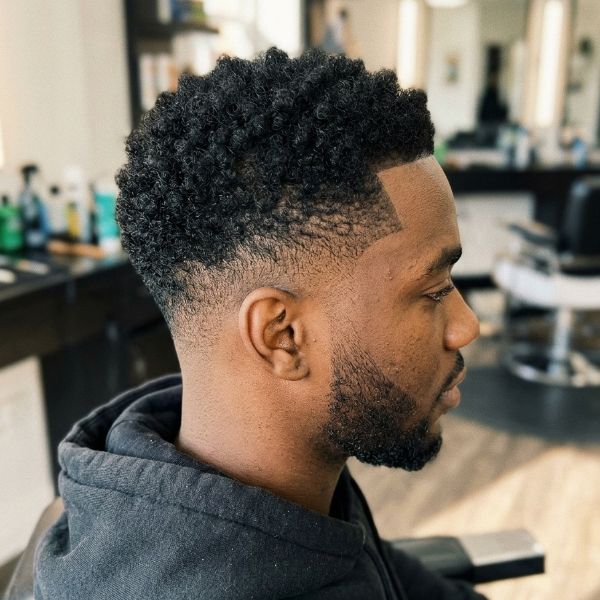
A low taper fade haircut for Black men is a short, clean cut that leaves extra length on the sides, then gently shrinks the hair around the ears and neckline. It keeps your natural texture visible, sharpens your outline, and stays subtle enough for the office, school, and weddings.
The same base works with waves, curls, an afro, twists, locs, or a close buzz. This guide explains what the cut is, how it compares with mid and high tapers, which style suits your face shape, exactly what to tell your barber, and how to keep it fresh between visits. You will also find product advice, cost ranges, and quick answers to common questions.
What is a low taper fade haircut?
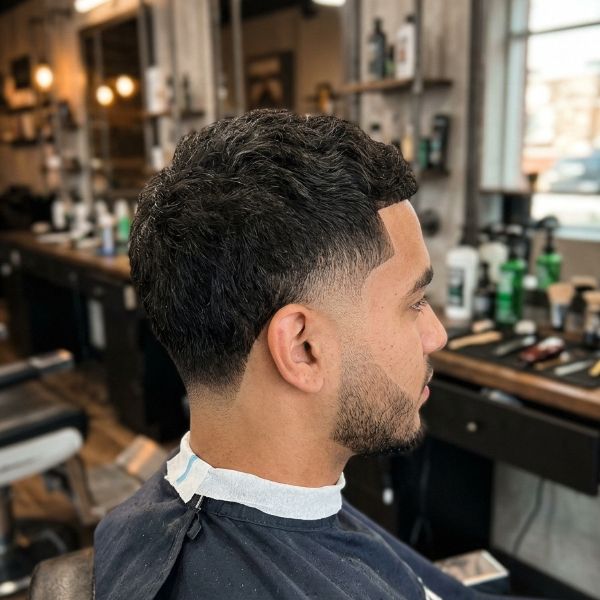
A low taper fade is a haircut where the hair gets gradually shorter around the sideburns, ears, and neckline. The blend starts low, just above the ear and along the nape, while the rest of the sides and the top keep more length.
The central idea of this guide is simple. A low taper fade frames your natural texture instead of fighting it. It cleans up the outline, keeps the head shape balanced, and leaves plenty of room to change what happens on top.
Here is how the cut is built:
- Start point: The blend begins low, roughly level with the top of the ear.
- End point: The hair is shortest at the sideburns and nape, either lightly tapered or faded close to the skin.
- Top: Length stays, from a short crop to a full afro, twists, or locs.
- Tools: Barbers use clippers with guards (plastic attachments that set the cutting length), trimmers, and a comb to blend the transition.
How it differs from a regular fade
People mix up “taper” and “fade” all the time. A taper shortens hair gradually and usually leaves some length at the end.
A fade is more dramatic. It tends to blend down to very short stubble or bare skin and often climbs higher on the head. A low taper fade borrows from both, so you get a soft blend over a small area.
The main differences are:
- Height: A low taper stays near the ears and nape. A regular mid or high fade climbs toward the temples or crown.
- Contrast: A low taper leaves more hair at the bottom, so the change in length is gentler.
- Skin exposure: A skin fade shows bare scalp. A low taper keeps more coverage.
- Regrowth: A skin fade shows regrowth quickly. A low taper hides it better.
- Mood: Regular fades read as bold. A low taper reads as clean and understated.
Why a low taper fade works with Black hair textures
Many Black men have hair in the type 3 to type 4 range of the Andre Walker hair typing system. This popular chart, created by hairstylist Andre Walker, sorts hair from straight (type 1) to tightly coiled (type 4). Coily hair grows up and out, shrinks as it dries, and tends to be dry because scalp oil travels slowly along every bend of the strand.
Those traits explain why this cut works so well:
- Clean structure: Coily hair can look uneven as it grows. A tapered edge keeps the outline neat without removing volume on top.
- Visible texture: Waves, curls, and coils stay in focus because the length stays where the pattern lives.
- Kinder to skin: Curly hair is more prone to razor bumps, also called pseudofolliculitis barbae, where a cut hair curls back and grows into the skin. Healthline lists avoiding very close shaving as one prevention step, and a low taper keeps more hair than a skin fade.
- Graceful growth: The blend sits low, so the cut looks tidy for longer than a high fade does.
- Flexible base: You can switch from waves to twists to a buzz without changing the sides.
Best low taper fade styles for Black men
The taper stays the same. What changes is the top, the texture, and the finishing details. Pick the style that fits your hair pattern and your routine.
Low taper fade with waves
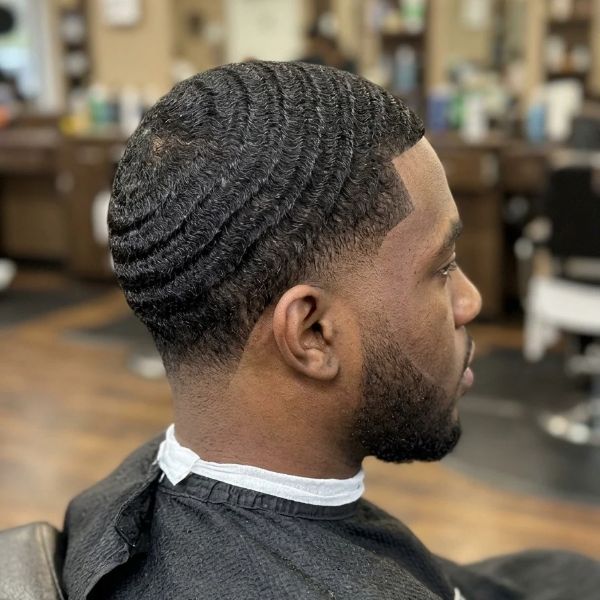
Waves are a ripple pattern created by brushing short, moisturized hair in a consistent direction. The classic version is called 360 waves because the pattern circles the whole head from the crown.
Keep the top short, often a #2 to #3 guard, so the pattern shows. A low taper protects the wave pattern near the temples and nape, since the blend does not climb high into it.
Brush daily, moisturize lightly, and wear a durag (a soft cloth cap) at night to lock in the pattern.
Low taper fade with curls or an afro
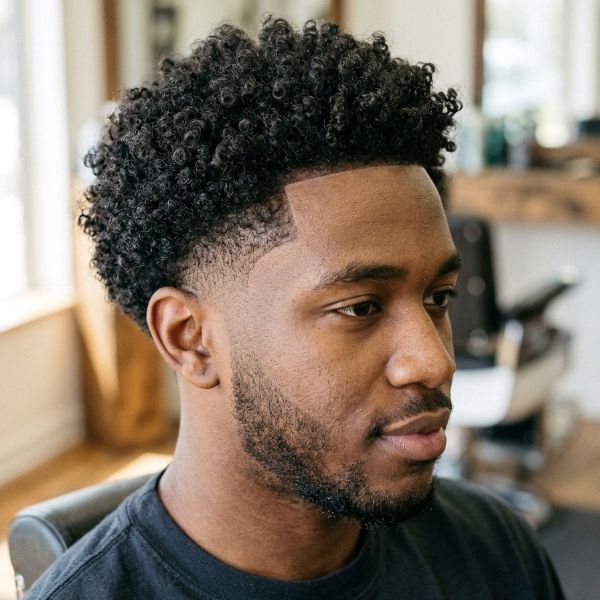
This is a strong choice if you want volume. Keep about 2 to 4 inches on top, then ask for a rounded shape that tapers into the sides.
Define curls with a curl cream and a twist-out (hair twisted while damp, then unraveled once dry). For an afro, lift with an afro pick and keep the outline even with a light shape-up.
Moisture matters most here. Dry curls look frizzy, and frizz hides a clean taper.
Low taper fade with sponge curls, twists, or locs
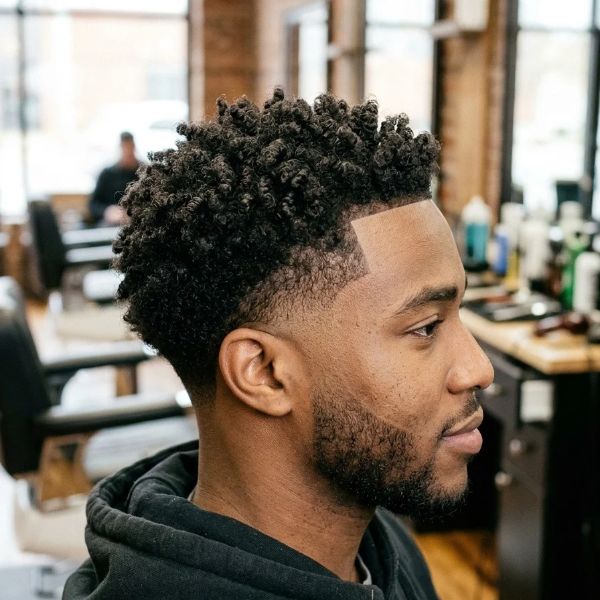
Textured tops pair well with a tidy base. Each option works a little differently:
- Sponge curls: A small coil sponge is rotated over short hair to form tight, even coils. This works best on 1 to 3 inches of hair.
- Twists: Two-strand twists wrap two sections of hair around each other. The taper keeps the sides neat so the twists look deliberate.
- Locs: Locs are ropes of hair formed by twisting or matting coily hair. A low taper on the sides and nape keeps them looking groomed. Plan regular retwists with a loctician (a specialist in loc care).
Low taper fade with a buzz cut
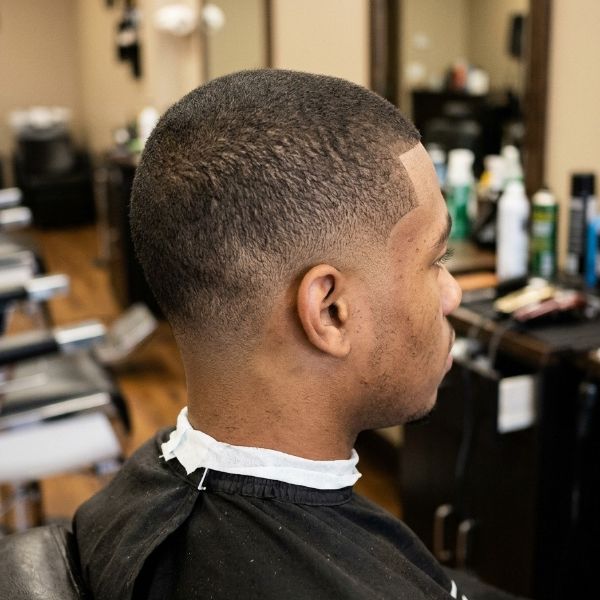
A buzz cut with a low taper is the simplest version. Ask for a #2 to #4 on top and a slightly tighter blend at the sides and nape. It needs little styling, shows off head shape, and grows out evenly. Moisturize your scalp, and use sunscreen on it outdoors.
Low taper fade with a beard and line-up
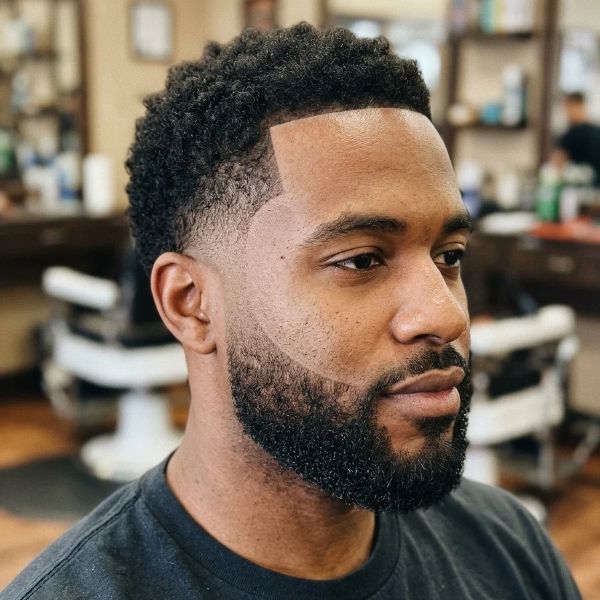
A line-up, also called a shape-up or edge-up, is a crisp line cut along the hairline, temples, and cheek line of the beard. A low taper pairs well with this because the sideburn blends straight into the beard. Ask your barber to connect the two so there is no hard break.
Keep the beard trimmed to a consistent length. A sharp beard line makes a simple cut look finished.
Low taper vs mid taper vs high taper fade
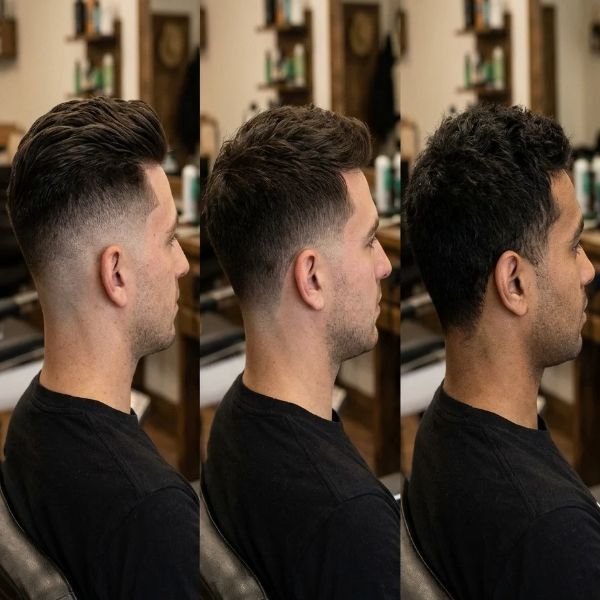
| Type | Where it starts | Overall look | Typical touch-up |
|---|---|---|---|
| Low taper fade | Just above the ear and nape | Subtle, clean, conservative | Every 3 to 4 weeks |
| Mid taper fade | Around the middle of the sides, near the temples | Balanced, modern | Every 2 to 3 weeks |
| High taper fade | At or above the temples | Bold, high contrast | Every 2 weeks |
How to choose the right low taper fade for your face shape
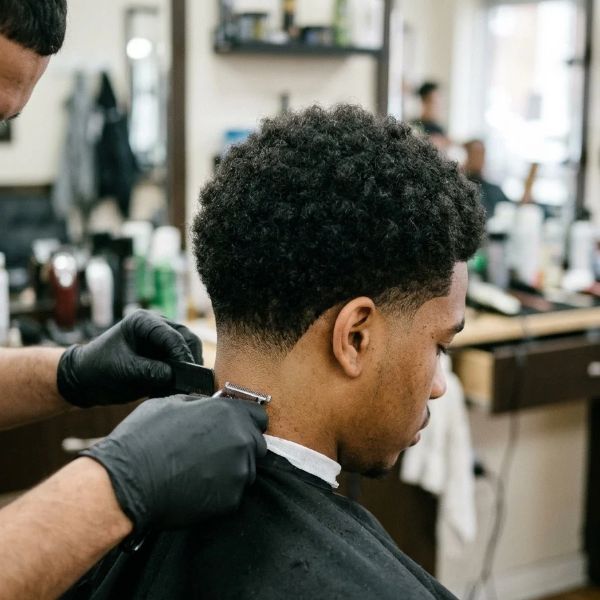
| Face shape | Suggested low taper style | Why it works |
|---|---|---|
| Oval | Waves, afro, twists, or a buzz | Balanced proportions suit almost anything |
| Round | Tight taper at the temples, extra height on top | Height lengthens the face |
| Square | Rounded top, soft blend, neat beard | Softens strong angles |
| Oblong (long) | Fuller sides, modest height, textured crop | Adds width and avoids stretching the face |
| Heart | Slightly fuller top, a defined beard | Balances a narrower chin |
What to ask your barber for a low taper fade
A clear request prevents most bad haircuts. Give your barber three things: the height of the blend, the length on top, and the finish at the hairline and neck.
Guard lengths and fade height
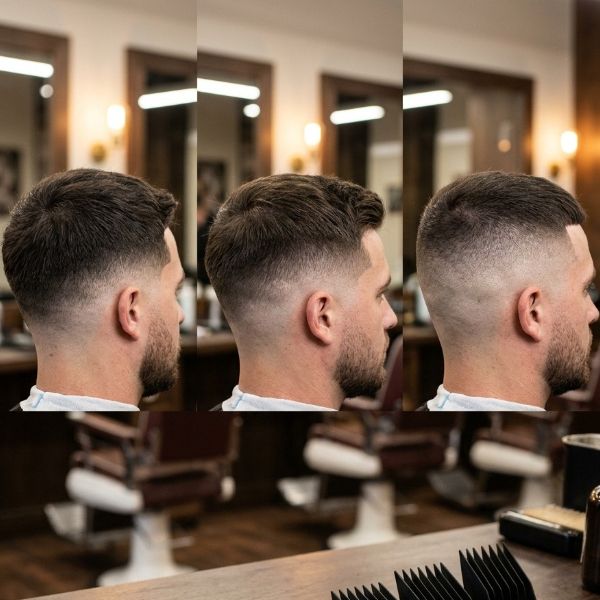
Guard numbers show how much hair stays. In common Wahl-style numbering, #1 leaves about 1/8 inch (3 mm), #2 about 1/4 inch (6 mm), #3 about 3/8 inch (10 mm), and #4 about 1/2 inch (13 mm). Brands vary, so confirm with your barber.
Fade height is described by where the blend begins. For a low taper, point just above the ear and say “low.”
You might say:
- “Low taper fade, starting just above the ear and around the nape.”
- “Start the bottom at a #1, or a #0.5 for a tighter finish, and blend up to a #3.”
- “Leave about two inches on top.”
- “Natural hairline with a clean line-up.”
- “Blend the beard into the sideburn.”
Why a reference photo helps
Words like “low” and “short” mean different things to different people. A photo shows blend height, contrast, and hairline shape in one glance.
Pick a photo of someone with a similar hair texture, because a cut on straight hair will not look the same on coils. Show a front view and a side view if you can. It also helps to show a photo of what you do not want.
How to maintain a low taper fade
The cut stays sharp with regular touch-ups and a simple routine. Skip either one and the outline gets fuzzy.
How often to get a touch-up
Book every 2 to 3 weeks if you want a crisp edge. Every 3 to 4 weeks works if you prefer a softer, grown-in look. If you wear a beard, a quick line-up every 1 to 2 weeks keeps the edges clean.
Daily and weekly routine
Keep it short and repeatable. Daily steps:
- Brush your hair gently to spread natural oils and lay waves.
- Apply a light moisturizer or leave-in conditioner.
- Style with a curl cream, wave pomade, or light oil, depending on your texture.
- Cover your hair with a satin durag or bonnet at night.
Weekly steps:
- Wash with a sulfate-free shampoo (sulfates are strong cleansers that can strip natural oils).
- Condition after washing, and deep condition when your hair feels dry.
- Gently clean your scalp, then moisturize it.
Keeping the hairline fresh
The hairline is the first thing people notice, so protect it. Avoid tight hats and styles that pull at the edges, since constant tension can cause traction alopecia, which is hair loss from repeated pulling.
If you shave your own edges or beard line, follow the American Academy of Dermatology, the leading U.S. group of dermatologists.
Its tips include shaving in the direction your hair grows, applying a soothing aftershave, placing a cool damp washcloth on the skin afterward, and replacing a disposable razor after 5 to 7 shaves. If bumps keep returning or leave scars, see a board-certified dermatologist.
Best products for a low taper fade on Black hair
| Product | What it does | What to look for |
|---|---|---|
| Leave-in conditioner or moisturizer | Adds and seals in hydration | Water, shea butter (a plant fat from the shea nut), glycerin, aloe |
| Curl cream or twist butter | Defines curls and twists | Lightweight formulas without heavy buildup |
| Wave pomade or light oil | Adds sheen and helps waves lay flat | Non-greasy, easy to wash out |
| Boar-bristle brush | Spreads oils and trains waves | Soft or medium bristles |
| Sulfate-free shampoo | Cleans without stripping | “Sulfate-free” on the label |
| Scalp oil | Moisturizes a buzz-cut scalp | Jojoba or argan oil |
| Alcohol-free aftershave balm | Calms skin after a line-up | Aloe or other soothing ingredients |
| Satin durag or bonnet | Protects hair overnight | Satin or silk, not too tight |
Common mistakes to avoid
These errors cause most disappointing results:
- Asking for “a fade” with no height. Always say low, mid, or high.
- Skipping the reference photo. It removes guesswork.
- Choosing a barber with little experience on coily hair. Check their portfolio for textures like yours.
- Letting the line-up cut too deep. A hairline pushed back too far looks sharp for a week and strange afterward.
- Using harsh, alcohol-heavy aftershave. It can sting and dry the skin.
- Stretching touch-ups too long. The taper loses its shape.
- Stacking heavy products. Buildup makes hair look dull and uneven.
- Sleeping without protection. Cotton pillowcases pull moisture and flatten waves.
Low taper fade cost and appointment time
Prices depend on city, shop, and barber experience. According to Booksy, a booking platform for barbers and salons, a men’s cut or fade in the U.S. typically costs about $30 to $65 and takes 30 to 60 minutes. Beard work usually costs extra.
Here is how to plan:
- Time: Allow close to an hour if you add a line-up and beard shaping.
- Booking: Reserve ahead for weekends and before events.
- Tip: Many clients tip 15 to 20 percent for good service.
- Yearly budget: A $45 cut every three weeks is about 17 visits, or roughly $765 a year.
If budget matters, a longer gap between visits with a low taper costs less than a high fade.
Is a low taper fade good for work, school, and formal events?

Yes. The low taper is one of the safest cuts for professional and formal settings because it looks groomed without being flashy.
- Work: Pair a short top with a clean neckline for an office-ready look.
- School: Keep the top neat and the edges tidy. Check the dress code if your school restricts designs or parts.
- Interviews: A fresh cut and a subtle line-up signal care and attention to detail.
- Weddings and formal events: Book your cut two to three days ahead so the edges look sharp but settled.
If your workplace has grooming rules, ask about hair length and beard policy before you choose a long top or locs.
FAQs about low taper fade haircuts for Black men
What is a low taper fade for Black men?
It is a cut that starts the blend low above the ears and nape, leaving the sides and top fuller. It suits coily, curly, and wavy textures.
Is a low taper fade the same as a low fade?
Not quite. A low taper usually keeps more length at the bottom, while a low fade often blends closer to the skin.
How often should I get a low taper fade touched up?
Every 2 to 3 weeks for a sharp finish, or every 3 to 4 weeks for a softer look.
Does a low taper fade work for 4C hair?
Yes. 4C is the tightest coil pattern, and a low taper keeps the shape clean while the top holds its volume.
Will a low taper fade cause razor bumps?
It can if the skin is shaved too close or against the grain. Cutting with the grain and using a soothing aftershave helps.
How long should my hair be on top?
About 1 to 3 inches suits waves, sponge curls, and short twists. Use 2 to 4 inches for a defined afro.
What should I tell my barber?
Say “low taper fade,” name the guard lengths, state the length on top, and show a reference photo.
Can I get a low taper fade with locs?
Yes. Taper the sides and nape and leave the locs on top.
Is a low taper fade professional?
Yes. It is subtle and neat, which makes it suitable for work, school, and formal events.

Noah Daniel Davis is an experienced content writer and hair enthusiast who creates engaging articles about hairstyles, haircuts, hair care, and the latest styling trends. His goal is to share simple, useful, and inspiring hair ideas that help readers discover styles they love.
